
How does a dance community care for the people whose bodies make the art possible? “Dance for Life,” an annual fundraiser held by the Chicago Dance Health Fund, answers that question by providing a night where the community comes together to support Chicago based dance artists in need of financial aid due to healthcare costs. The question carries weight in an American healthcare system where access to care remains deeply tied to employment. Professional dancers piece together careers through freelance contracts, short-term projects and multiple jobs. Few dance companies can afford to provide comprehensive health insurance even though dancers depend on their bodies for their livelihoods. “Dance for Life” offers one answer: turn the labor of making dance into a form of collective care.
The “Dance for Life” anniversary performance, at the Auditorium Theatre, August 22, makes that exchange especially visible. What began with Keith Elliott’s response to the devastation of HIV/AIDS in Chicago’s dance community has grown into a major source of financial assistance for dance professionals facing critical health needs.
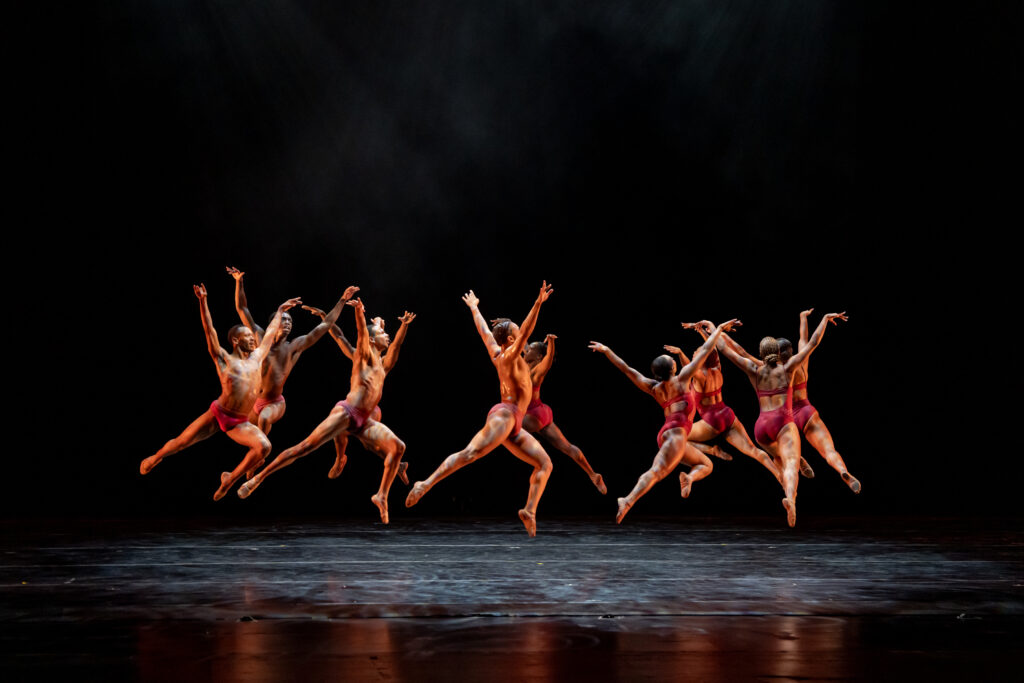
That idea is visible throughout the evening’s program. Deeply Rooted Dance Theatre’s “Beyond Mortal,” choreographed by Nicole Clarke-Springer, opens with familiar music by Mozart, blending contemporary ballet with hints of classic modern dance. As the piece comes to an end, the music resolves into an elongated “Amen.” The theater feels less like a performance venue and more like a place of religious gathering—a fitting beginning for an evening centered on community and care.
The event turns into a jubilant celebration in Giordano Dance Chicago’s “Sabroso,” choreographed by Del Dominguez and Laura Flores. Ballroom, lindy hop and salsa merge into lively partnerships beneath disco balls, emphasizing the pleasure of dancing with and alongside another person. The work also acknowledges the social dance traditions that are the roots of jazz dance.
Physical connection becomes more intimate in Joffrey Ballet’s “Postcards,” choreographed by Robert Joffrey. Accompanied by a live pianist, the classical pas de deux keeps the dancers connected throughout, with ivory costumes and restrained partnering creating an atmosphere of tenderness. Where “Sabroso” celebrates connection through social dance, “Postcards” finds it through physical trust between two performers.
Trust expands into collective identity in Chicago Dance Crash’s “Loud,” choreographed by KC Bevis and the ensemble. A DJ accompanies the dancer’s energetic blend of hip hop within a concert dance setting, and the traditional cypher format allows individual dancers to maintain their identities while contributing to something larger than themselves. “Loud” is a particularly joyful expression of the community and mutual support at the heart of “Dance for Life.”
If the cypher demonstrates community in the present, Ensemble Español Spanish Dance Theater’s “Antecesores/Ancestors,” choreographed by Jose Torres, turns toward those who came before. Dancers lean into one another as a soloist approaches center stage. Circular pathways, rolling wrists, swaying hips and intricate flamenco foot percussion create a ritualistic energy. The work becomes an act of remembrance, honoring the ancestors of the art form.
History gives way to the physical demands of the dancer’s body in Ballet 5:8’s “Grace in the Rush,” choreographed by Stephanie Martinez. Contemporary ballet vocabulary meets pointework as splayed hands, parallel positions and undulating torsos craft a language that feels both sculptural and restless. Two couples move in discord with one another, suggesting the complexity of trying to remain connected while navigating separate experiences.
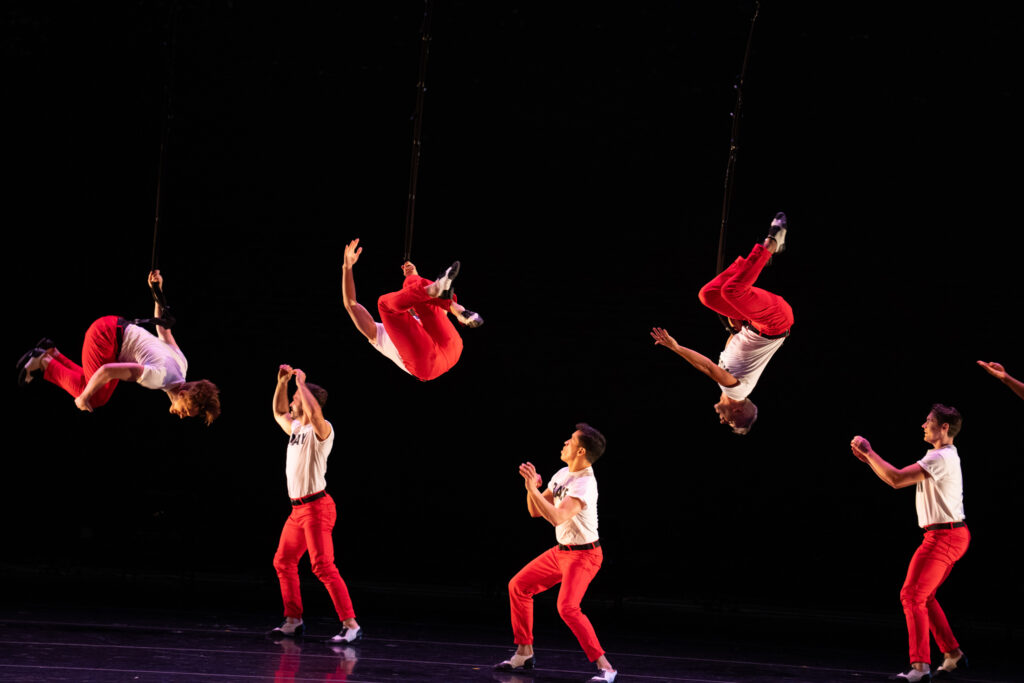
The tension between individuality and collective experience continues in “Red, White, & Black,” choreographed by Harrison McEldowney and Jeremy Plummer. Five dancers suspended from bungees move alongside five counterparts on the ground. Shirts marked with various decrees, such as “Change,” “Hope,” “Life” and “Respect,” add a social dimension to the breathtaking aerial work. As the first half closes, the piece leaves us with a question that extends beyond the stage: What do we stand for—as artists, as a city and as a dance ecosystem?
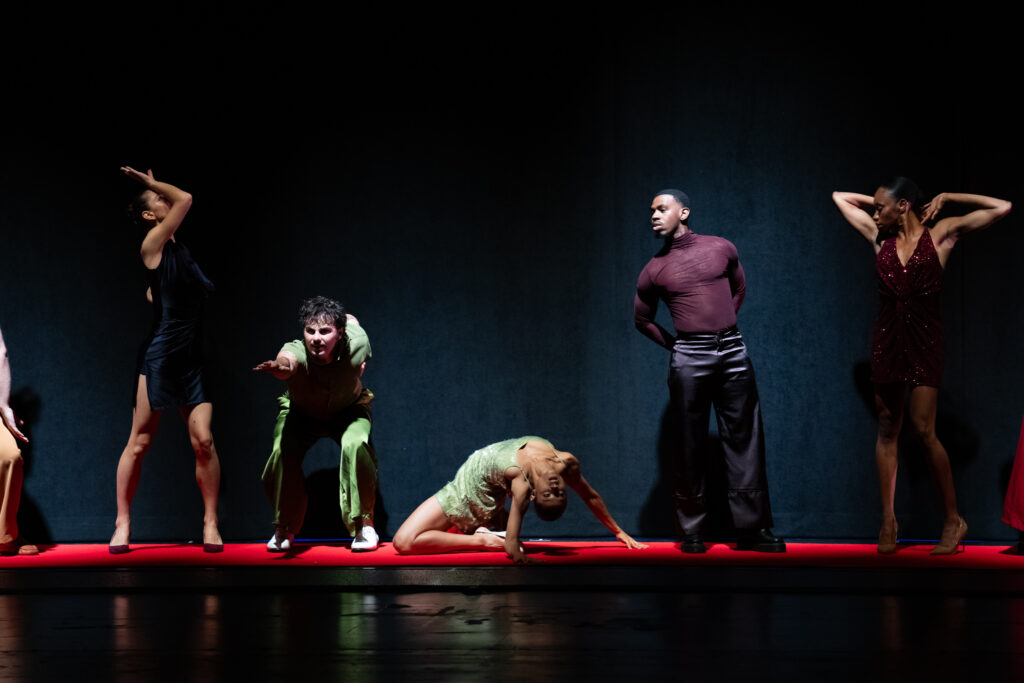
Visceral Dance Chicago’s “R E V E L,” choreographed by Nick Pupillo, brings the audience back to focus with unabashed pleasure. What begins as a glamorous red-carpet spectacle transforms when the perceived socialites shed their shoes and the curtain ascends to reveal a live pianist and drummer, shifting from fashion and performance into sensual contemporary movement.
Sherry Zunker’s “The Man That Got Away,” performed by two Joffrey Ballet dancers, was presented at the first “Dance for Life” in 1992. The duet becomes a physical artifact of the event’s past. Its themes of illusion, absence and memory resonate differently in a celebration that has endured for many years.
History continues to evolve in Trinity Irish Dance Company’s “SÉseacht,” created and directed by Michelle Dorrance, where live musicians accompany a large group of dancers who challenge conventional expectations of Irish dance. Their intricate footwork creates complex polyrhythms against the musicians’ 7/8 score, demonstrating that dancers don’t simply respond to music—they become another layer of it.
Hubbard Street Dance Chicago’s “TOUCH & AGREE,” choreographed by Juel D. Lane, draws from house, voguing and club culture, and the rambunctious cohort bring the energy of Chicago’s social dance floor onto the concert stage. Like Chicago Dance Crash, Hubbard Street demonstrates that concert dance remains connected to the communities from which movement emerges.
Robyn Mineko Williams and Artists’ “Cloudline” turns connection into something precarious. A massive sheet of fabric repeatedly separates a vulnerable duo before ultimately consuming one and leaving the other alone. The audience’s audible gasp demonstrates how completely the work transforms a simple material into an emotionally charged world.
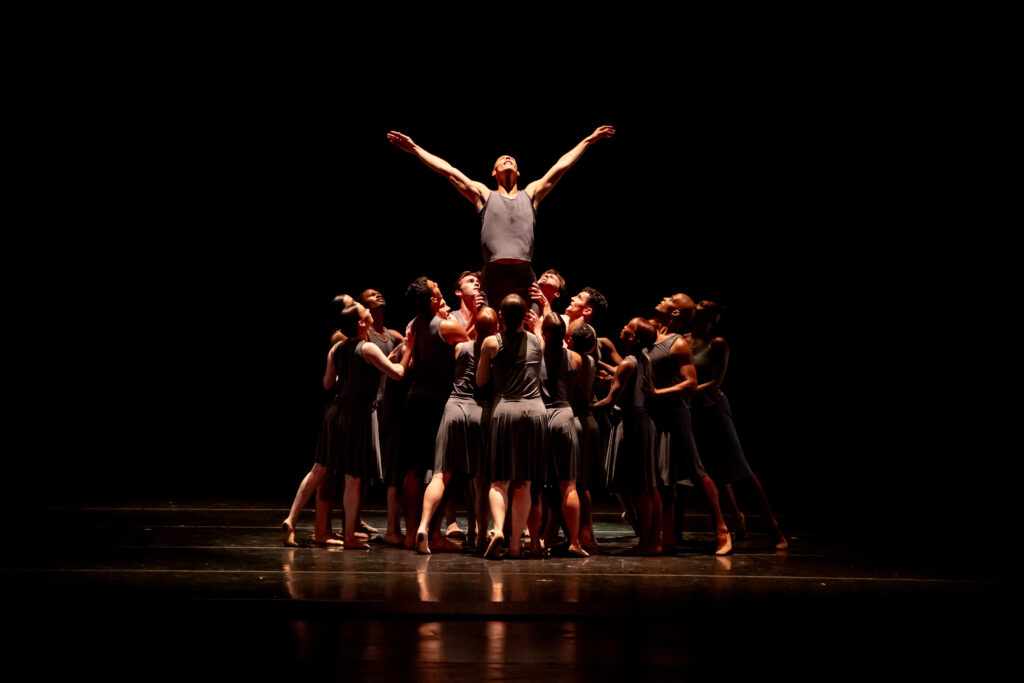
An accumulated sense of connection, separation, history and resilience culminates in the finale by Randy Duncan, “Renewed.” Preluded by a short video honoring Duncan’s career and his contributions to “Dance for Life,” his musical partner Ira Antelis informs the audience that this work is autobiographical for Duncan. It begins with a soloist performing longing and extended movements to song lyrics that depict someone who has gone through hardship and yearns to arise from their woe. The music expands into an upbeat pop and R&B tune as the ensemble enters, and we see the soloist dancing with vigor as they cease looking backward and start finding the strength to move forward, surrounded by a cohort of dancers from across Chicago. Its message becomes a direct encapsulation of “Dance for Life” itself: the individual may face hardship, but they do not have to face it alone.
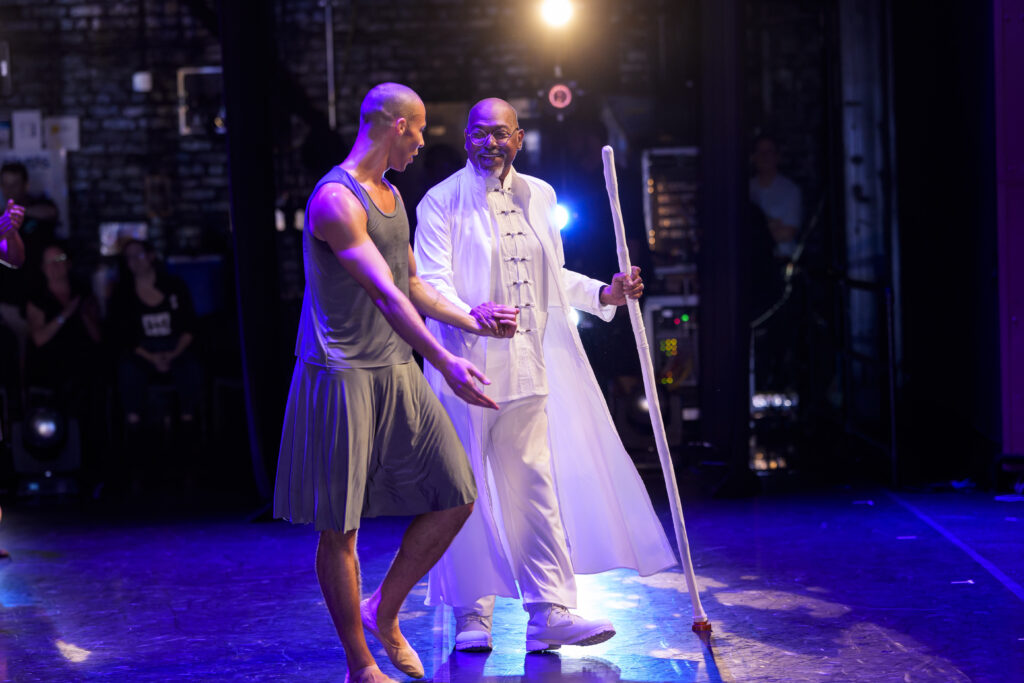
“Dance for Life” is more than a celebration of Chicago dance. The artists are giving their labor to support artists who need assistance, revealing both the generosity of the community and the precarious conditions that make that generosity necessary. The event cannot solve the structural problems of healthcare or the gig economy, but for one night it creates an alternative model: artists caring for artists, with the labor of their bodies transformed into tangible support for someone else’s life.
Chicago Dance Health Fund presents “Dance for Life” 2026 at Auditorium Theatre on Aug. 22. For more information, check out the event page by clicking HERE.
Copyright 2026, See Chicago Dance, All Rights Reserved