Did you ever wonder what happens to old dancers? They can’t, won’t, or simply don’t stop dancing! Some seniors even begin dancing for the first time after 50! As my alter ego Mehitabel the Cat1 says, “There’s a dance in the old dame yet!”
Pioneer modern dancer Daniel Nagrin is but one example of someone who danced well into his sunset years, which he wrote about in his book, “How To Dance Forever.” Who else?
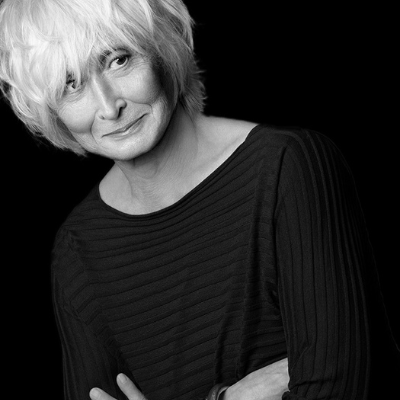
In past years, José Limón performed the lead role in his classic work, “The Moor’s Pavane,” when he was 61, and Martha Graham danced into her 70’s. Charles Weidman was still dancing at the age of 65. Merce Cunningham performed at his 90th birthday celebration. I was lucky enough to have seen these luminaries at the end of their long careers when I was a young dancer myself. At the time, I hardly grasped how age had ripened their art, not diminished it.
Today, we can look to older New York dancemakers such as Meredith Monk, Wendy Perron, Twyla Tharp, Cathy Weiss, Liz Lerman, Rennie Harris, Misty Copeland and Robert Battle for examples of dancers/choreographers still making tidal waves on the stage and in the studio.
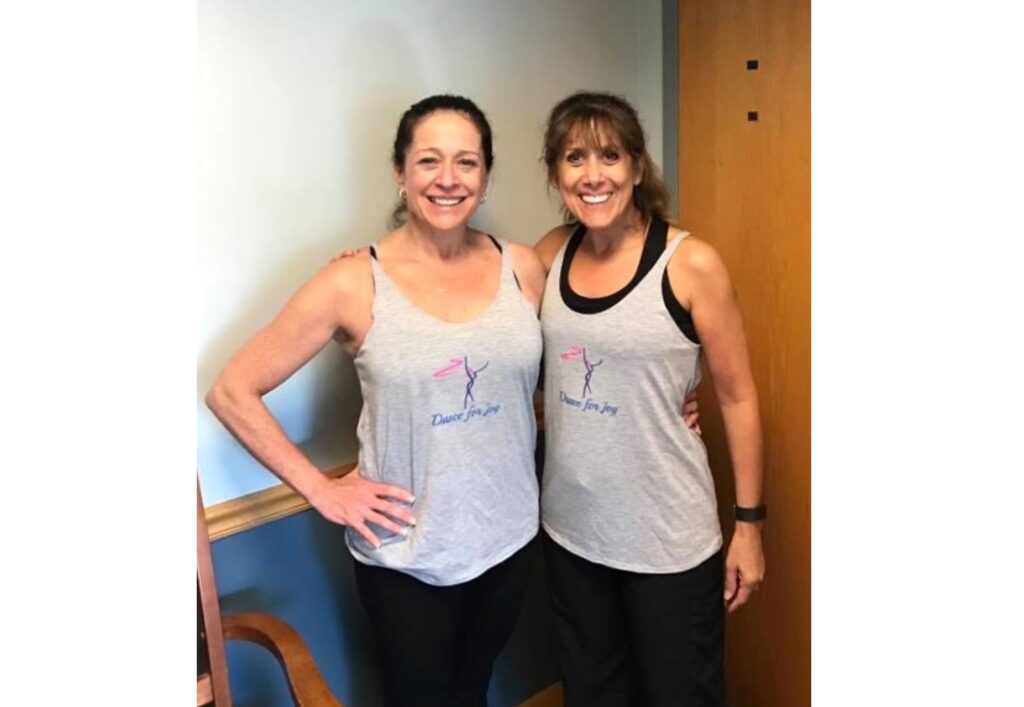
Former Joffrey ballerina Lynne Belsky, MD, 67, manages to carve out two days a week from her busy practice in internal medicine for “Time To Dance,” teaching ballet classes in north suburban Chicago for older dancers, from beginners to advanced, some with disabilities and age-related arthritis, decreasing flexibility, and declining muscle strength.
Belsky’s “Time To Dance” began when she and a group of veteran dancers and teachers would meet for what they called their “Ladies of the Dance Lunch.” Nothing was off-limits for their conversations, including the challenges of recovery from illnesses and injuries, including Belsky’s recovery from breast cancer surgery. One day, Belsky said, “Why are we sitting here eating when we could be dancing?”
“And YOU should teach the classes!” they countered to Belsky. Their encouragement led to “Time to Dance” at North Shore School of Dance, owned and run by Lisa Gold, 65, also a breast cancer survivor. Gold wanted to give women recovering from breast cancer treatment an opportunity to feel positive about their bodies. What better way than through dance?
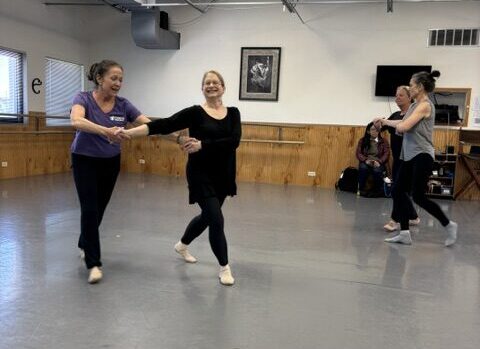
Initially, Gold called her breast cancer classes “Dance for Joy.” The name stuck as a moniker for Belsky’s “Time To Dance.” Her classes were so popular that dancers without breast cancer began attending, too.
“Time to Dance” continued on ZOOM during COVID, and in person again after the pandemic. “Dance for Joy” has been modified to include any dancer over 50. In addition, anyone dealing with cancer can receive a scholarship for classes in ballet, modern dance, tap, or jazz during the month of October for Breast Cancer Awareness month.
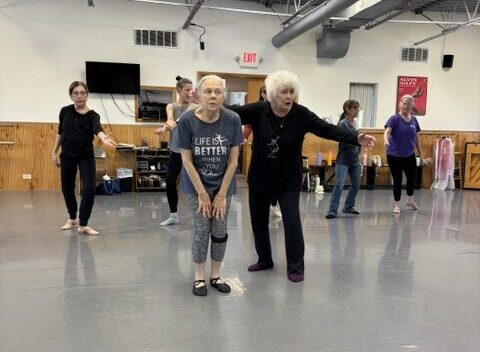
Dance has also become a popular therapeutic tool for older adults, with geriatric dance classes offered in hospitals, rehab centers, and nursing home memory units.
Werner Martin, 75, teaches ballet and Pilates for older adults at Lake Forest Hospital’s Health and Wellness Center. “It’s like a prayer, the ritual,” Martin says of his life as a dancer and teacher of older adults. In a recent interview, he explained how he must modify his movement when he demonstrates for his ballet students, like not going all the way down into a full grand plié, or lifting his leg to as high an extension. He doesn’t give any jumping combinations in his classes either. “The energy is really good there,” he says of his students, one of whom is in her 90’s.
Former professional dancer Ginger Lane, 87, is founding director emeritus of CounterBalance, a physically integrated dance program and dance company in Chicago, comprised of dancers with and without disabilities. She consults on bringing dance to in-patient facilities and with Chicago theaters on creating inclusive environments for children and adults with disabilities.
Many dancers over fifty are still performing and choreographing. Toby Nicholson, 86, a working dancer/actor/choreographer, danced with Phyllis Sabold and Sybil Shearer, the latter a Chicago Dance icon who played a key role in pioneering modern dance in America and Europe. Shearer became a modern dance sensation in New York but chose to teach and develop her choreography in the relative obscurity of suburban Northbrook where she had her studio.
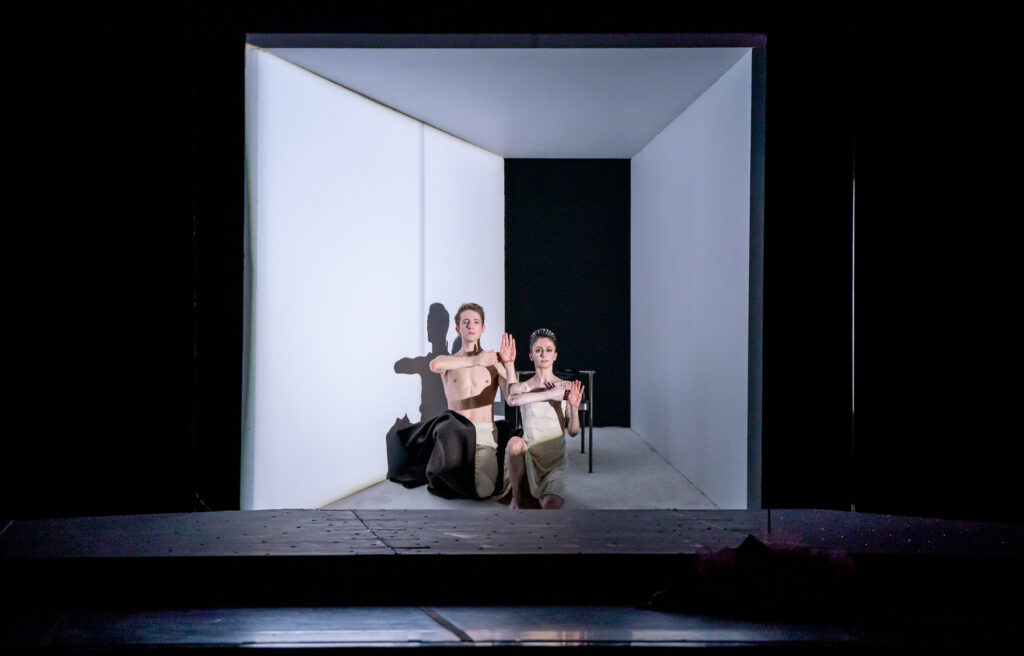
John Neumeier, 87, originally a Milwaukee native, studied and performed in Chicago before continuing his career in Europe. Recently retired from his tenure as artistic director of the Hamburg Ballet, Neumeier recalled having been encouraged to meet Shearer at her studio. Later, Shearer danced for him in her backyard. Neumeier said he was so captivated by her movement that he joined her company that very day. It was while dancing in Shearer’s company that he met Nicholson.
Two years ago, Neumeier asked Nicholson to stage one of Shearer’s pieces on the Hamburg Ballet. “She used classical music,” Nicholson said of Shearer’s work. “It was a benign opening, which lulled the audience into expecting conventional dance lyricism, but then—tantrum!” Nicholson recalled. He had no trouble reconstructing the piece on the German ballet company, but Shearer’s choreography was about so much more than the steps, he said, and at first, the Hamburg Ballet dancers were “too superficial; no depth.” Nicholson, determined and unrelenting, persevered until they got it. The performance was a critical success and became part of the Hamburg Ballet repertory.
Today, Nicholson is still active as a performer, director and choreographer. No longer able to drive to Belsky’s ballet classes, he takes dance classes at a senior living community in Evanston, where he and his wife now live. Never one to sit still, Nicholson will stage his adaptation and production of Dickens’ “A Christmas Carol,” in its fifth year at the Winnetka Community House, this coming December. When asked what it feels like to dance today, Nicholson replied, “A joy! I really have fun doing it!”
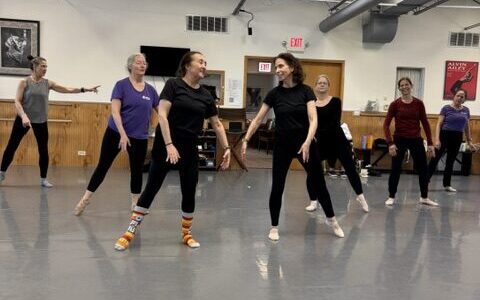
Now, at 77, I too am an old dancer. One happy discovery from writing this piece is finding that I’m not alone. There are old dancers all over the world, and their resilience is inspiring.
Dance, like many cultural, religious, and artistic practices, is handed down “from generation to generation” (Hebrew Bible). Nowhere is that more apparent than in the dance community!
While each of their stories is unique, a common thread runs through them all: dance is a gift, and regardless of their diverse religious, cultural, and educational backgrounds, dance is a spiritual devotion that transcends age and the technical demands of the art form. “When I walk into an empty studio,” Belsky said, “I feel I am in sacred space.”
How do you dance forever? However you can. I hope to do it myself. You should try it!
For more information about “Time to Dance,” check out their website by clicking HERE.
1. “The Lives and Times of Archy and Mehitabel,” by Don Marquis, Doubleday & Company, 1933.
Copyright 2026, See Chicago Dance, All Rights Reserved