

Boykin Dance Project’s concert, “Boykin THREE” at Ann Barzel Theater, this weekend almost didn’t happen. Unlike sports or large dance companies, small dance companies rarely have bench players or understudies prepared to step in if an injury or illness should occur. In this case, personal emergency and dancer injury forced the absence of artistic director Brian Josiah Martinez and lead dancer Ryan Dick from the final stages of the production process, putting the concert in jeopardy.
In a brief curtain speech prior to opening night, the company dancers gathered and described banding together to move forward despite these giant hurdles. No explanation was necessary though, as there was no sign of hindrance during the five dances presented. But this tidbit of insight brought extra intrigue, especially in the re-staging of Martinez’s 2024 frenetic romp, “Real People, Not Paid Actors,” in which powerhouse dancer, Hanna DiLorenzo took on Dick’s role, seamlessly performing the type of power lifts typically reserved for the broader shoulders of a male-presenting body.
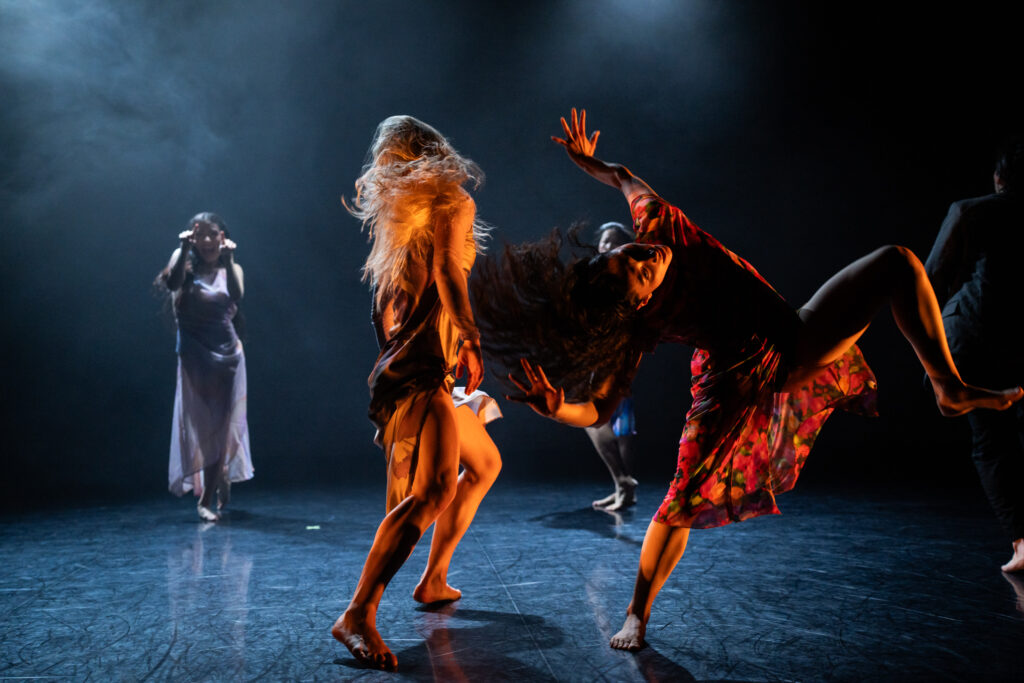
In Boykin’s movement style, grounded gesture, detail and athleticism hover underneath dark and dramatic themes sprinkled with sparks of humor. Premieres by Adam Barruch, Jessi Stegall and Mark Caserta as well as a new solo from Martinez, along with help from the fearless and leggy, Josie Starr, all featured common threads of virtuosity and surprise.
In the case of “I can set it on fire if you want me to,” Martinez and Starr’s solo, Starr struggles with a pair of spike-heeled shoes. Mesmerizing and sinewy, she crawls then leaps. Bruising falls lead to amorphous flails, only for Starr to re-congeal into human form in a single beat. The piece grows in urgency (while a thumping bass soundtrack borders on irritation) as she moves between standing in the stilettos and dancing barefoot. Although compelling to watch, Starr could use a bit more guidance and clarity in the motivation behind her struggle.
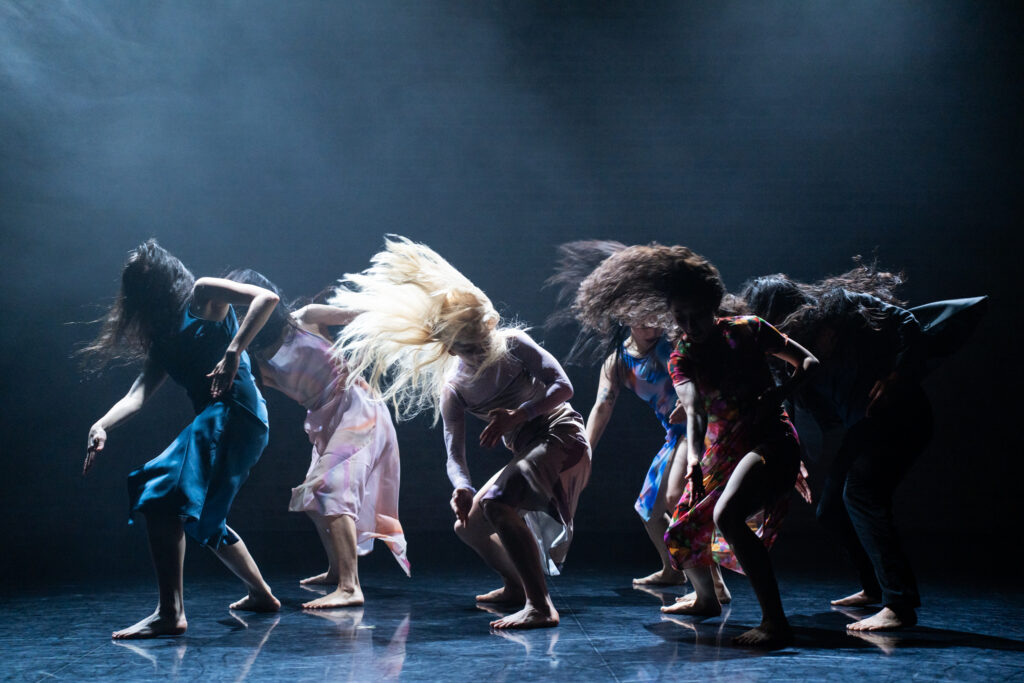
Stegall’s gestural, well-formed “Ethic Red” comments on moral code, the feminine body and Nathaniel Hawthorne’s classic, “The Scarlett Letter.” The loose narrative opens on a sharply gesturing flock of seven figures in black skirts with feet planted firmly. Seemingly stuck in place, they gasp for air. As if putting on stiff gloves or wiping sweat from their foreheads, they progress into swirling arcs from which a soloist emerges (DiLorenzo), shunned by the stifling group. Clever wooden chairs conjure the likeness of an old school classroom during a strained power struggle duet. And in the brilliant, tongue-in-cheek final section, dancers laugh, pulse and peek curiously into their lacy skirts as DiLorenzo is further concealed behind the ruffles. Stegall seems to be questioning who decides what is good or bad, while confronting the control and discomfort of learning right from wrong.
In Martinez’s aforementioned “Real People, Not Paid Actors,” humor leads to desperation. Created along with performers from the previous Boykin TWO concert, this action-packed grind of a dance puts the ensemble on a relentless exploration of social perception and commercialism with perhaps a nod to the inescapable presence of AI. Entertaining yet grueling, the sextet evolves in freneticism as does the accompanying familiar, perhaps overused, “Bolero,” soundtrack. DiLorenzo lifts Starr on her shoulders with the ease of a stars-of-the-Bolshoi pas de deux. The group laughs, sporting the fake smiles of a toothpaste commercial. They paw through gossip magazines like bored housewives, then crowd together, bouncing, screaming silently and wobbling side to side like eerie childhood dolls with loose hair flying. It’s exhausting with only fleeting moments of stillness, yet the solid ensemble embodies the quick shifts of Martinez’s movement and captures the gaping difference between the one-dimensional nature of how we perceive images of others and the depth of being a real human.
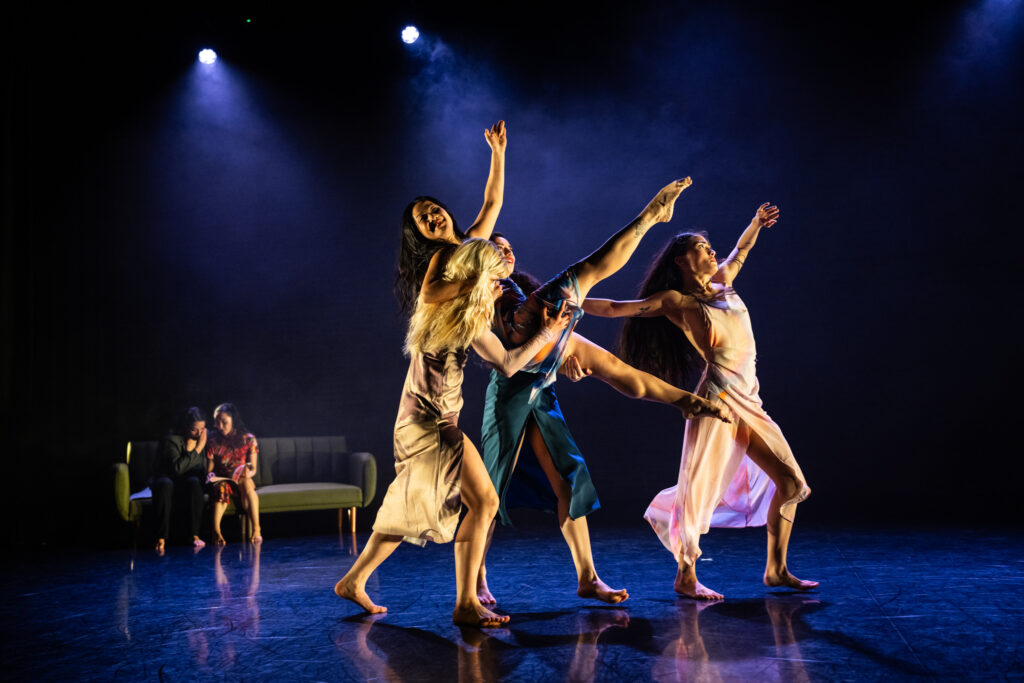
The real treasures of the evening came in a pair of duets opening each act of the program. Gorgeous in execution and simple in concept, “Last Resort,” choreographed by Barruch, featured DiLorenzo and last-minute replacement, Jenna Dike. Like ghosts appearing from nowhere, the pair hunched over and dragged fingertips on the floor as if defining the area where they remained. Isolated in a hallway of light (no lighting designer was credited in the program) the two carved and dropped into deep lunges, interlocking arms like a disentanglement puzzle. Soft and somber, “Last Resort” meditatively drifted together, then apart again.
Taut, boxy repetition evolved to smooth connection in Caserta’s “soft skull,” danced with care and intimacy by Kara Hunsinger and Lily Cong. As if describing a cardboard shipping box, their hands pulsed in such clear unison that they appeared as one being. It isn’t until later in the piece, after head-shaking, heart-shaped hand gestures and hands maneuvering their own legs that the two discover the power of physical contact. The simple gesture of one dancer encircling hands around the other’s head leads instantly to a calming effect. From there, the dancers strikingly metamorphose into near liquid form, and the effect is exquisite and powerful.
Boykin Dance Project presents “Boykin THREE” June 12-13 at the Ann Barzel Theater, 3121 N. Rockwell. For more information, check out the event page by clicking HERE.

Copyright 2026, See Chicago Dance, All Rights Reserved