
“They shine so brightly! Beautiful talents—very high level,” said Sandra Kaufmann, who has set Martha Graham’s ballet, “Diversions of Angels” on the Chicago Academy for the Arts Repertory Dance Company. The dancers, angelic to be sure in their youthful embrace of this iconic choreography, might very well feel like they’ve died and gone to heaven on the eve of their first performances of “Icons of Choreography,” this Saturday at the Athenaeum Theatre. Works by three choreographic giants of the 20th century—Graham, Gerald Arpino, and Alvin Ailey, plus two works by our own Chicago dance icon, Randy Duncan—make up the program.
“Icons Of Choreography” is a program not to be missed. Not only is this a special opportunity to appreciate the creative vision and far-reaching impact these masters have had on dance today, but it’s a chance to share the excitement of seeing their work come alive in emerging artists discovering these dances for the first time.
Lest you think they’re just kids, think again! “These kids are willing to invest fully,” Kaufmann said after a recent rehearsal, comparing them to some professionals she’s worked with.
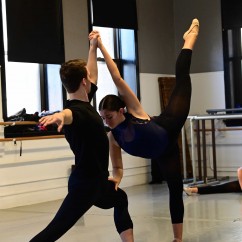 The high school-age dancers, many on the cusp of launching professional careers or embarking on elite college conservatory programs, are up to the challenge of the choreography, typically licensed only to professional companies like American Ballet Theatre, and only under strict supervision.
In this case, that supervision means a dream team comprised of Kaufmann, a former dancer in the Martha Graham Dance Company; former Joffrey dancer, Christopher Huggins; Harriet Ross, dance coach; Natalie Rast, dance faculty and associate director of the Academy Repertory Dance Company; and Duncan, head of the Academy dance program.
Love and the love of dancing unite all three “Icons” pieces, each expressed through a different dance idiom. Gerald Arpino’s ballet “Kettentanz” (1971), Martha Graham’s modern dance “Diversion of Angels” (1948), and Alvin Ailey’s jazz-inspired “Escapades” (1983), each bring distinctive music, mood and movement vocabulary that make for a performance that’s not only fun and stimulating to watch, but a great showcase for the dancers and the Academy’s holistic training program as well.
When the Joffrey premiered Gerald Arpino’s “Kettentanz” in 1971, Clive Barnes, writing for the New York Post, labeled it a “ballet that unfolds with youthful zest that belongs to all time.” Arpino called "Kettentanz” “a salute to old Vienna,” but its Vienna references are limited to the music and the “chain dance” configurations of its opening and closing sections. Set to music by Johann Strauss, Sr. and Johann Mayer, the nine dance miniatures offer the dancers a seemingly innocent romp through some technically daunting variations. The sunny playfulness of the choreography is a valentine to young love, and a perfect ballet for dancers of any age to radiate joy.
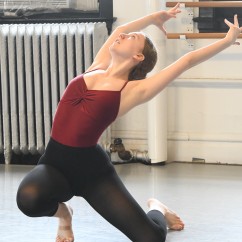 Martha Graham described “Diversion of Angels” as “three aspects of love,” from a woman’s point of view, each represented by a different color costume: Adolescent Love in yellow, Romantic Love in red, and Mature Love in white. Graham said her goal was “to communicate the inner landscape of a woman’s heart.” Of the three “Icons” pieces, Graham’s choreography, so specific to the codified technique she pioneered, is the most challenging for any ballet-based dancer to internalize.
Norman Dello Joio’s commissioned score for “Diversions” invites dancers into the caverns and peaks of its rich emotional landscape. Graham’s movement inhabits that landscape with highly-stated forms that heighten emotion, combining flow and momentum with a kind of architectural grandeur you just don’t see on stage in today’s contemporary choreography.
Watching “Diversion of Angels,” we are reminded of the profound universal truths Graham was able to reveal through the body. Her brilliant use of gesture and shape to drive the energy that propels the movement into space, and her integration of the rhythms, melodies, and orchestrations of the music into the fabric of spatial design are unparalleled among today’s contemporary choreographers.
Graham’s movement is a tall order for any dancer to embody, and few outside the Graham company, all of whom have trained for years in her technique, are able to achieve the internalization her ballets demand. Graham Technique is part of the dance curriculum at the Academy, and these young dancers have a great head start on that process.
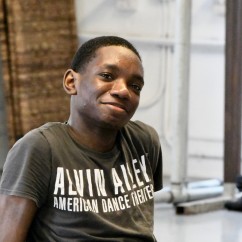 High school senior Lillian Yokum says Alvin Ailey’s “Escapades,” set to music by jazz legend Max Roach, is “fun; pretty jazzy. With the character I go into, I picture I’m in a '20s speak easy, having a good time.”
“Escapades” tells a love story through a combination of modern dance, jazz and ballet. The smile on sophomore Mary Campbell’s face letting loose in Ailey’s saucy jazz moves, nailing a triple turn into a balance in arabesque, illustrates critic Diane Dakers’ contention in her Times Colonist review that the piece “mostly shows off the dancers’ love of dance.”
As a teacher and head of the Academy’s dance program, Duncan, like a proud papa bear, oversees an endearing brood of 34 dancers, half of whom comprise the Repertory Company. In addition to being an award-winning international choreographer of concert dance, theater, and film, Duncan’s heart is clearly centered on nurturing these young dancers with a discerning eye, exacting discipline, and the gentle voice of a zen master.
“Icons of Choreography” is the first in a three-year series for the Chicago Academy for the Arts Repertory Dance Company, endowed by a generous grant from Barbara Levy Kipper, who gave Duncan carte blanche to use the grant in whatever way he saw fit to best serve the program. Duncan embraced this unique opportunity to expand the scope of the Academy’s training and its role in the larger community by exposing his student dancers and their lucky audiences to the great dance legacies of the icons.
Wouldn’t it be interesting to hear from them in another ten years or so?
—
The "Icons of Choreography" dance series takes place May 4 at 2 and 7 p.m. at the Athenaeum Theatre, 2936 N. Southport Ave. Tickets are $25, available by clicking the event page below.

Copyright 2026, See Chicago Dance, All Rights Reserved