
“Customer Service,” the second world premiere by Symbiosis Arts and the company’s first presentation at the Ruth Page Center, announced its ambitions before a single dancer crossed the stage. Artistic director Braedan Barnes opened the evening by discussing a reality familiar to many performers: supporting artistic careers through service industry work. Through conversations with company members, Barnes explained, a metaphor emerged—customer service often feels like the “Wild West,” unpredictable and lawless. It is an intriguing premise, ripe with choreographic and theatrical possibilities.
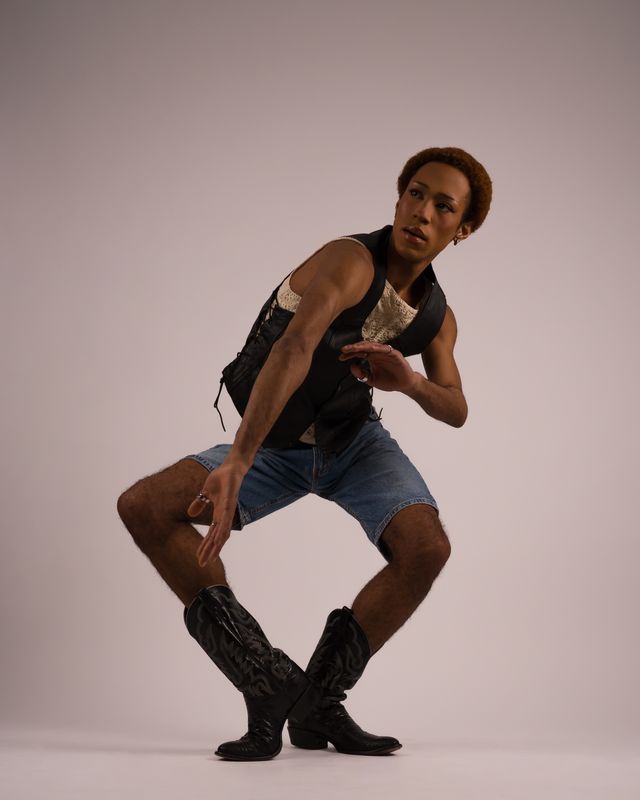
Audience participation began immediately. Two dancers coached viewers in Western exclamations—“yee haw,” “giddy up,” “ride ’em,” and “saddle up”—to be shouted whenever enthusiasm struck. A Country-Western instrumental score followed as dancers, dressed in Stagecoach-inspired denim, suede, and leather, clustered center stage beneath overhead lighting. Their synchronized lassoing gestures quickly evolved into mimed typing on imaginary keyboards, a movement motif repeated throughout the evening.
The work’s theatrical ambitions emerged early. As the ensemble exited, two performers appeared in only their undergarments, visibly horrified by the audience’s gaze—a familiar anxiety dream made literal: arriving at work or onstage half-dressed. Moving with frantic embarrassment to Glen Campbell’s “Rhinestone Cowboy,” they dressed themselves piece by piece as Western accessories were tossed onstage. Soon, the pair transformed into playful cowboys, scuffing the floor and firing finger guns punctuated with exaggerated “pew pew” sound effects.
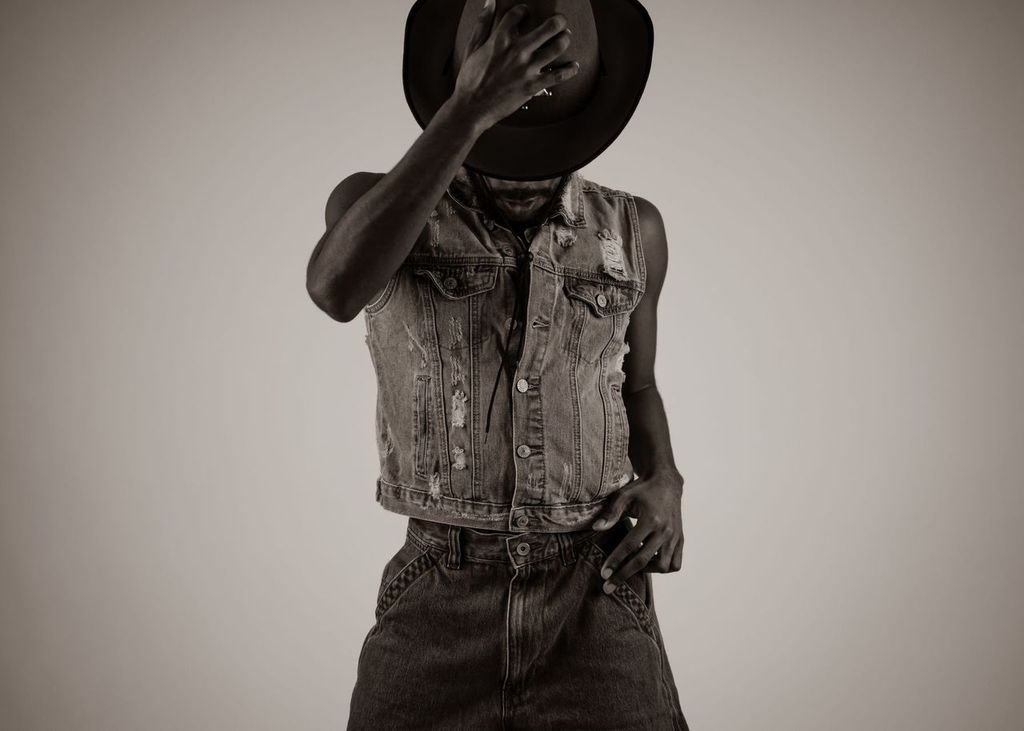
This blend of dance, camp, and theatrical comedy became one of the work’s dominant modes. Dancers later sat with microphones, recounting difficult experiences working at Olive Garden in exchanges reminiscent of cabaret or drag performance; the atmosphere evoked the direct, conversational quality often found in these forms, creating a sense of intimacy through the performers’ candid engagement with the audience. Microphone cords became lassos as movement resumed and performers embodied familiar Western tropes: tumbleweeds, tipped cowboy hats, finger guns, and horseback-inspired galloping.
At its best, “Customer Service” produced inventive stage pictures. Under magenta lighting, the cast launched into a line dance that gradually unraveled into something stranger and more exaggerated. Elsewhere, dancers transformed their bodies into vivid Western imagery: swinging saloon doors, galloping horses, and human sculptures resembling rifles or escaping outlaws. These moments showcased both the ensemble’s physical imagination and Barnes’ distinctive choreographic voice.
Yet the work frequently struggled to clarify its central argument.
While Barnes framed the piece broadly around customer service labor, nearly every anecdote centered on Olive Garden experiences. This specificity became limiting. A memorable sequence saw dancers construct a collective “work machine,” draping themselves across one another while typing on imaginary keyboards amid ringing phones and office sounds. Though visually compelling, the scene proved dramatically confusing. Aside from restaurant service, no workplace had been meaningfully introduced. Was this office labor? A call center? Administrative burnout? Without context, the metaphor became muddied.
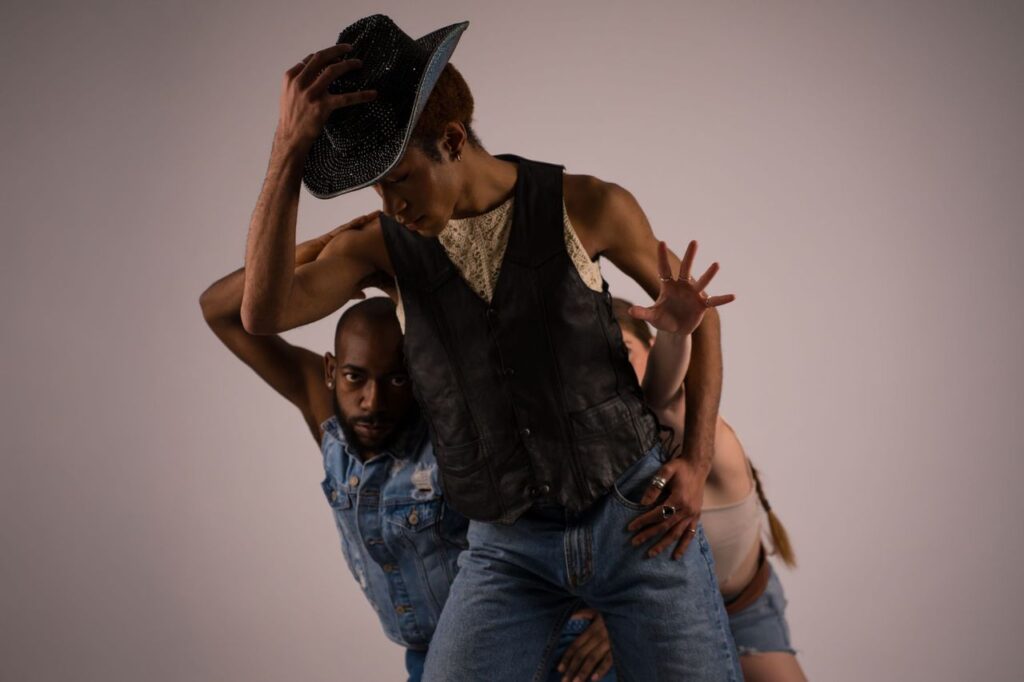
A grounded solo by dancer Claire Binguit—filled with suspended inversions and acrobatic fluidity—momentarily suggested frustration, burnout, or emotional dissociation from workplace pressures. Yet interpretive possibilities were interrupted as dancers slid across the floor barking complaints such as, “I ordered Swiss, not cheddar!” and “If I don’t get Diet Coke in five minutes…” Though recognizable and amusing, these moments once again narrowed the work toward restaurant labor rather than broader customer-facing experiences.
The sound score reinforced this fragmentation. Country-Western instrumentals collided with popular country songs, classical piano, office ambiance, and vocalizations hovering between chanting and yodeling. Rather than forming an intentional collage, the shifting music often lacked connective tissue, leaving audiences uncertain of the work’s emotional trajectory.
By the end of Act I, little had been concretely said or questioned. The experience resembled watching friends gather to vent about difficult jobs, except those jobs seemed overwhelmingly confined to one chain restaurant. One wonders whether richer customer service stories surfaced in rehearsal but never reached the stage. Shows like “A Chorus Line” succeed not simply through autobiographical honesty, but through diversity of perspective; audiences connect because they recognize themselves across varied experiences.
This issue persisted in an unnecessary second act. A potentially transformative moment arrived when Michelle Meltzer recounted “4 PM Karen,” embodied by a performer in a grotesque rubber mask. After fantasizing about shoving a moldy bread stick down Karen’s throat, Michelle paused to admit, “Maybe we’re not so different after all.” What felt like the beginning of meaningful introspection quickly disappeared beneath the theme from Rawhide. A moment that might have explored empathy, emotional labor, or worker exhaustion was brushed aside before it could deepen.
The irony is that “Customer Service” succeeds most when it commits fully to image and metaphor. The Wild West framework has real conceptual promise; anyone who has worked with the public understands the unpredictability of customer interactions. Yet the production rarely digs beneath that surface. The show gestures toward an urgent reality—that many artists maintain multiple jobs simply to survive—but stops short of interrogating it. There is fertile ground here for commentary on economic precarity or the funding models that leave dance companies unable to fully support their artists. Instead, the work remains tethered to isolated Olive Garden grievances.
Symbiosis Arts is undeniably composed of strong performers, and Barnes demonstrates an inventive choreographic eye. Yet “Customer Service” becomes lost in its competing impulses—part drag show, part dance theater, part contemporary dance, part workplace comedy—without fully committing to any one mode. Beneath its humor lies a more compelling work waiting to emerge: one that trusts the complexity of labor, frustration, empathy, and survival enough to let those stories unfold.
Symbiosis Arts’ “Customer Service premiered on May 23 at Ruth Page Center for the Arts. For more information, check out the event page by clicking HERE.

Copyright 2026, See Chicago Dance, All Rights Reserved