
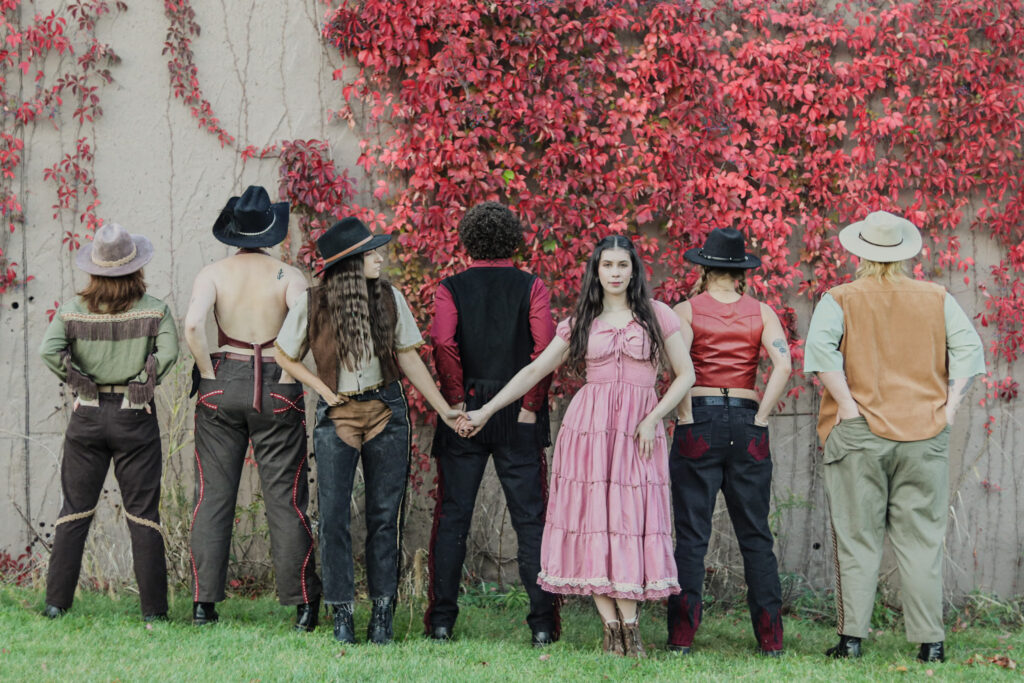
Saddle up, partner, for “A Flower in the Tumbleweeds,” a sapphic Western love tragedy presented by We Are Collective at Chicago Danztheater Ensemble. In this frontier, the Western becomes more than dust and duels; it’s a landscape where outlaws reclaim identity and challenge the gender binary with grit and tenderness. Romance blooms alongside a refusal to be fenced in, daring anyone to call queerness criminal when it’s simply the act of being unapologetically alive.
Before the love story, the audience is treated to “Rodeo Baby,” choreographed and performed by Rodney. Beginning with clown face paint, striped pants, and exaggerated expressions reminiscent of minstrel acts, Rodney presents a figure that entertains to survive. The movement constantly engages with and for the crowd, suggesting performance as both livelihood and mask.
The tone shifts as the song “Black Man in a White World” begins. Rodney sheds the clown attire, reclaiming Black identity through grounded, expansive movement. Turning away from the audience, their stomps echo like sermons, arms swing with purpose, and the body channels Black cultural traditions. By the end, a raw, self-defined presence remains: Rodney, proud to exist unrepentantly as Queer and Black before a final gunshot drowns the stage in red.
The love story, centering around Longshot Lani (Lani Anderson) and Miss Audrey Rose (Audrey Harnett), begins with Lani’s introduction in “Welcome to the Crick,” choreographed by Nik Graves. Lani appears as a lone rider aching for connection, with strong, deliberate gestures that convey both toughness and loneliness. When she encounters a cactus dressed in a gown, she becomes tender. Swishing the cactus’ dress, Anderson moves as if dancing with an imagined lover. Beneath the interaction lies a sincere longing that’s set for love to enter.
The relationship blooms in “Love is in the Air,” choreographed by Reign Drop, as the pair meet in a saloon. Their flirtation unfolds as they skip and swirl in a scene that captures the butterflies of a first encounter. A flower, plucked earlier from Lani’s cactus companion, becomes a gift to Audrey that binds their love. The choreography remains earnest, culminating in a cheeky kiss hidden behind a cowboy hat, grounding the audience in the sincerity of their connection.
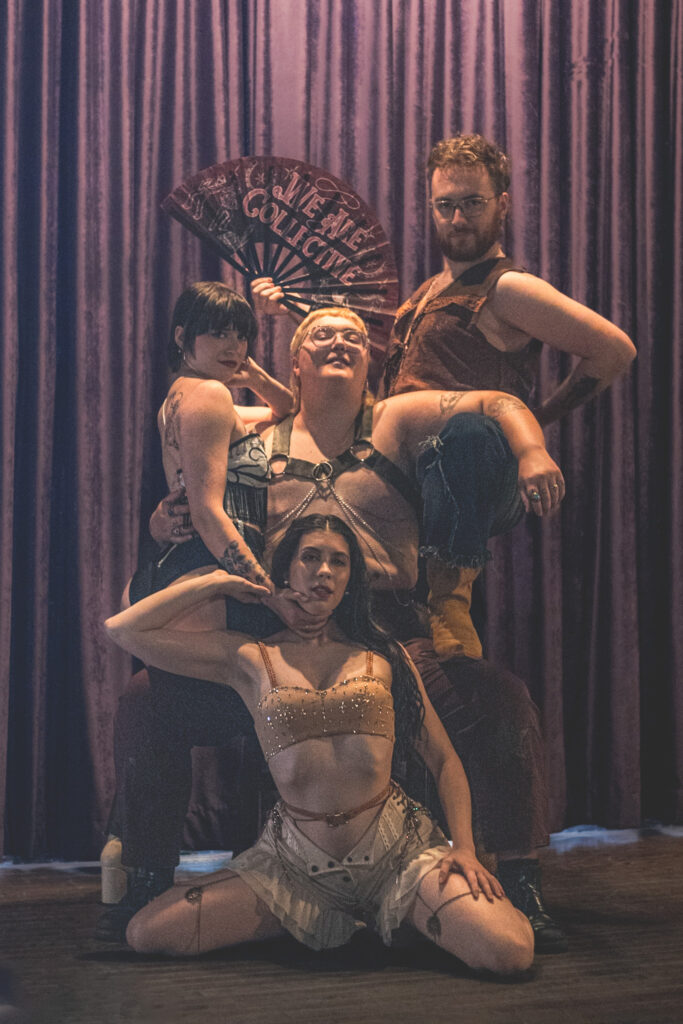
Villainy arrives with “Bandits Break In,” choreographed by Tristen Sanborn. The dastardly Cicero Brothers storm in with swagger, led by Bongo Cicero (Sanborn) and his sharp, commanding tap work. The rhythm builds from slow, ominous beats into rapid-fire footwork, establishing both menace and flair. Meanwhile, Bang and Bing Cicero (Alyssa Simpson and Isis Schmugge) maneuver boards painted like railroad tracks for Sanborn’s tapping, creating dynamic staging. Their villainy is laced with humor as the brothers talk back to the audience and bicker among themselves, making them as entertaining as they are threatening.
“The Encounter,” choreographed by Schmugge, escalates the stakes as Lani encounters the deadly trio. A battle unfolds with spins and kicks, her movements low and prowling. The hunters and hunted blur as bodies circle and clash. Lani slips away, reuniting with Audrey in a moment of urgency that closes the first act with tension thick in the air.
“The Silver Spur Saloon,” choreographed by Anderson with fight direction by Bianca Thompson, is a lively line dance that quickly curdles into confrontation when the lovers cross paths once more with the Cicero Brothers. Waltzing turns devolve into a one-on-one fight between Lani and Bongo. The choreography balances theatricality with impact, punches land, bodies recoil, and the surrounding ensemble eggs it on. Just as Lani’s victory seems within reach, a gunshot cuts through the air. She falls, collapsing into Audrey’s arms, a devastating reminder that this story is a tragedy.
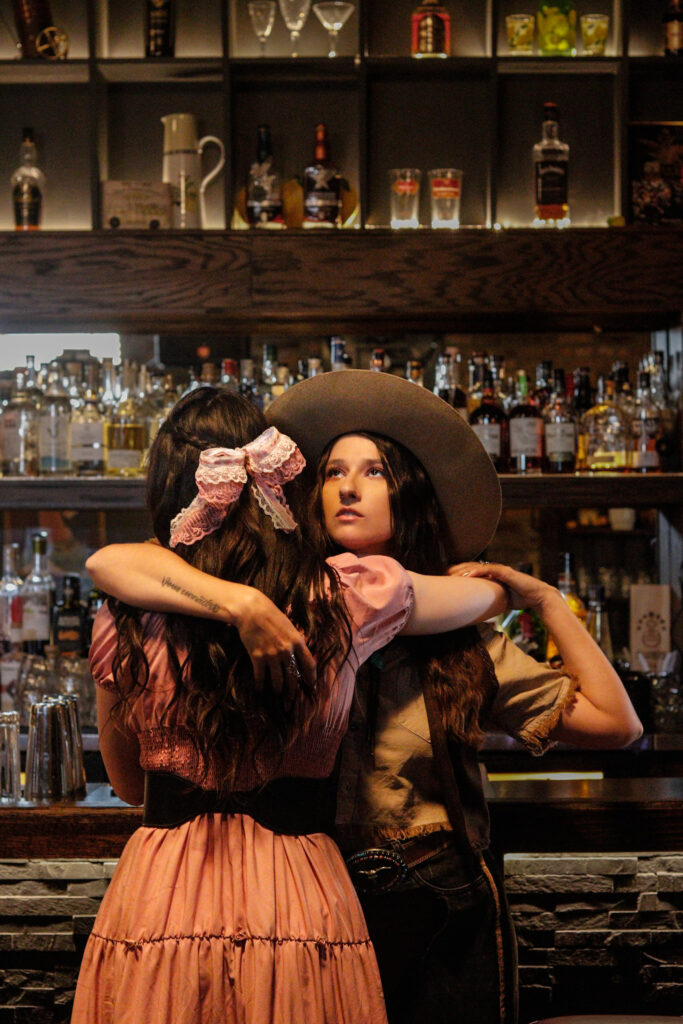
“A Lonesome Rose,” choreographed by Simpson, offers a haunting solo from Harnett as Audrey processes her grief. Gradually, sorrow sharpens into resolve, and she dons Lani’s fallen cowboy hat, solidifying her resolve for revenge.
The final piece, “Home at De Vere’s,” choreographed by Virginia VanLieshout, situates Audrey in a brothel that doubles as a queer sanctuary. The entire ensemble moves through the space with sensuality and confidence. When Bongo arrives, tension simmers beneath the seduction. What begins as a sultry dance turns into a final confrontation, culminating in Audrey smothering Bongo. Surrounded by her new community, Audrey is carried through the aftermath, grief and justice intertwining in a closing image of collective support.
All the dancers demonstrate excellent style, personality, and technique, fully committing to their characters, although some of the choreography leans a bit basic at times and could benefit from more variety. The music complements the performance well for the most part, with only brief moments where the tone of music and story feels slightly mismatched. Overall, the program is a breath of fresh air, inventive, charming, and heartfelt, celebrating both Queer love and the Western genre.
“A Flower in the Tumbleweeds” is presented by We are Collective through March 28th at the Chicago Danztheater Ensemble, 1650 W Foster. The show will return for Pride Month on June 26 & 27. For more information, visit the event page by clicking HERE, or visit the company’s website at wearecollective.com.
Copyright 2026, See Chicago Dance, All Rights Reserved