When existence is resistance, building community is key to maintaining one’s liberty. “Outlaw of the Arts Festival,” presented by We Are Collective, Aug. 28-30 at Chicago Danztheatre Ensemble, intends to turn artists and festival goers into “outlaws,” defiers of the rigid boundaries imposed on citizens living in the “Wild” Western world.
On Thursday, “artivism” workshops teach participants to cultivate tools to engage in activism while processing the experience though a myriad of artistic disciplines.
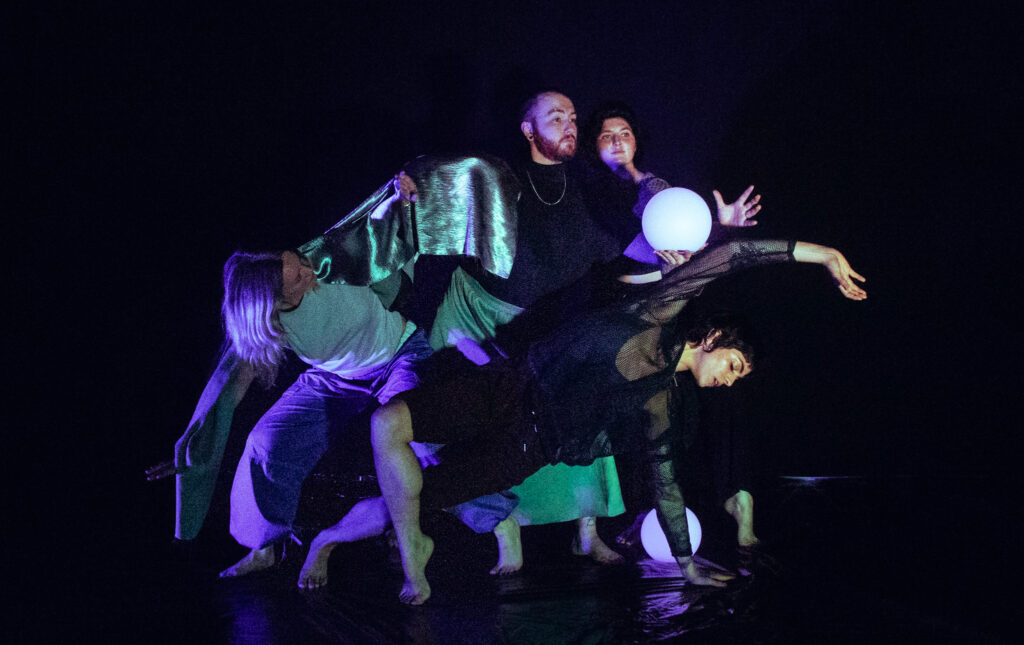
On Friday and Saturday, short and long form works showcase the depth and diversity of queer artists from across the dance landscape, including works by Maddy McCarthy, Aicha & Rodney, Mandy Milligan Movement Project, Identity Performing Arts, Nik Graves, GridLock, Chicago Danztheatre Ensemble, Cloudmoon Dance and many more.
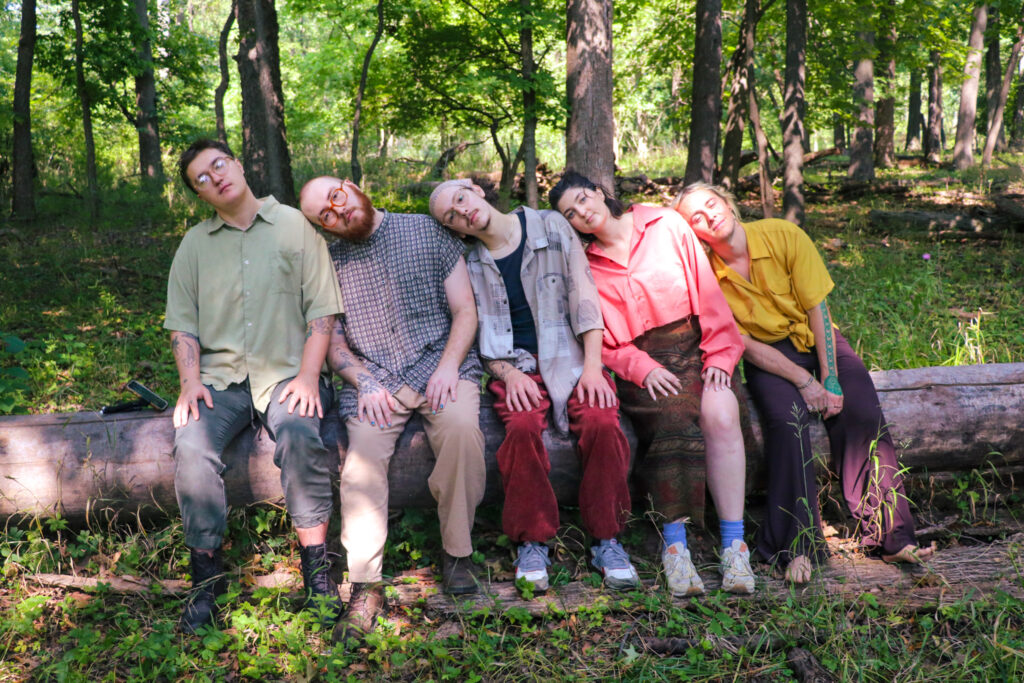
Reign Drop and Nik Graves, co-founders of We Are Collective, don’t consider “outlaws” to be bad people; in fact, they want more of them. “Audiences are stepping into the role of the ‘outlaw.’” says Graves. “As an outlaw, you don’t ask permission to exist, to speak, to create or to love.” Reign Drop says that the festival is a direct reaction to laws and restrictions being imposed by local and federal mandates taking place across the country. “Trans people are having spaces taken away from them—sports, bathrooms, even workplace discrimination. We’ve been trying to seek community because if people aren’t going to hold space for us, then we’ll hold it for ourselves and bring our friends with us.”
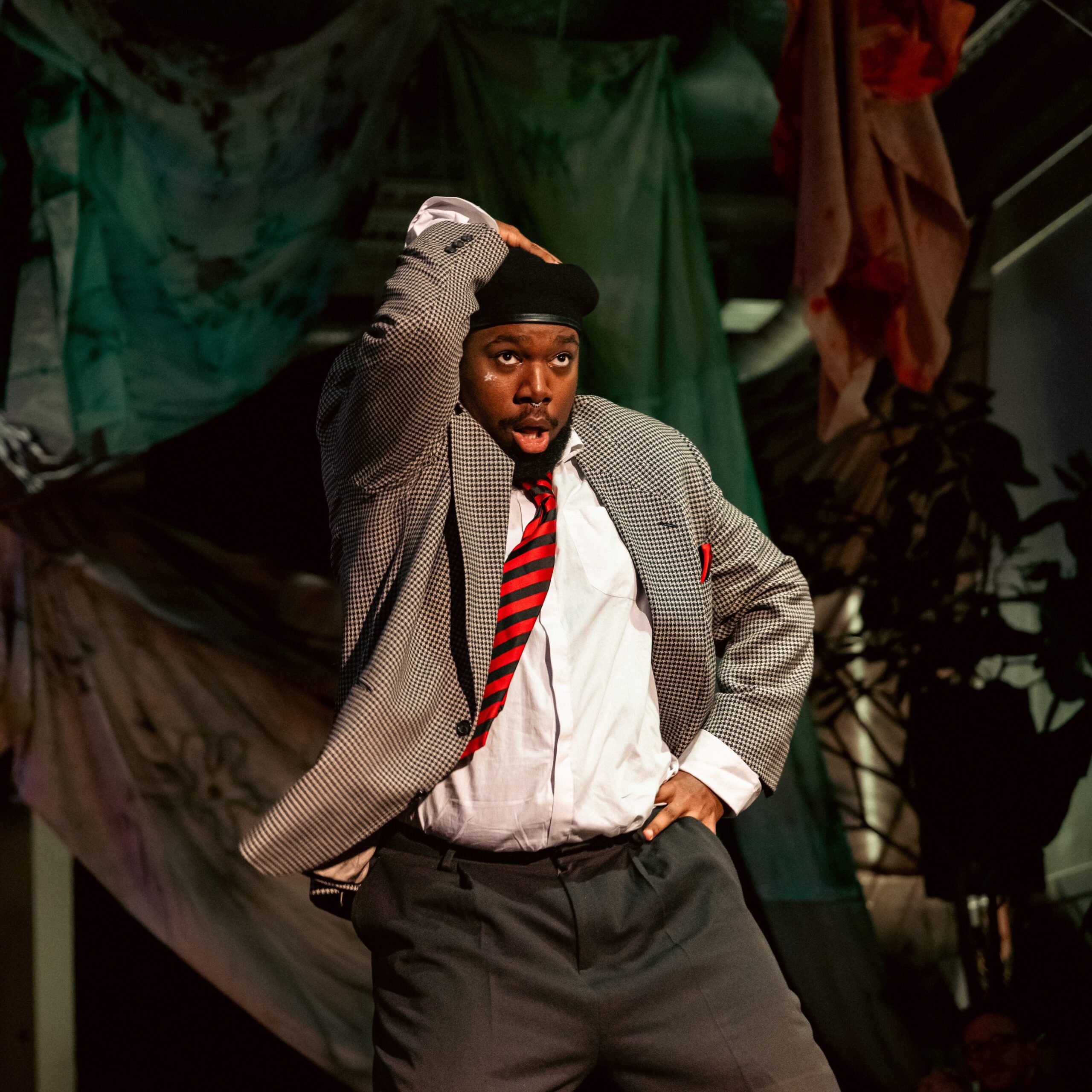
Both evening performances feature works that tackle important social issues but present them in a way that is fun, exuberant, touching and sexy. On Friday, “Yes,” by hip-hop and street dancer Rodney Bethea and ballet and contemporary dancer Aicha Chehmani, is a duet centered around the politicization of Black and queer intersectionality. “No matter what you do, your body is always a statement,” says Chehmani, “your body is still a Black, queer, trans person. You can do nothing and it’s still… a thing.” In “Yes,” Rodney & Aicha swap styles, hybridizing and queering expectations of each dance form. The “finger guns” moment: Slightly crouched, they point imaginary pistols at each other in a comedic relief that harbors a deeper meaning. “Moving through the world as Black queers, you feel like you have to have your guard up,” says Bethea. “Us pointing the finger guns at each other reflects how sometimes you put your guard up against other people who are like you.” In an oppressive environment, laughter and mirth can be a tactic for survival.
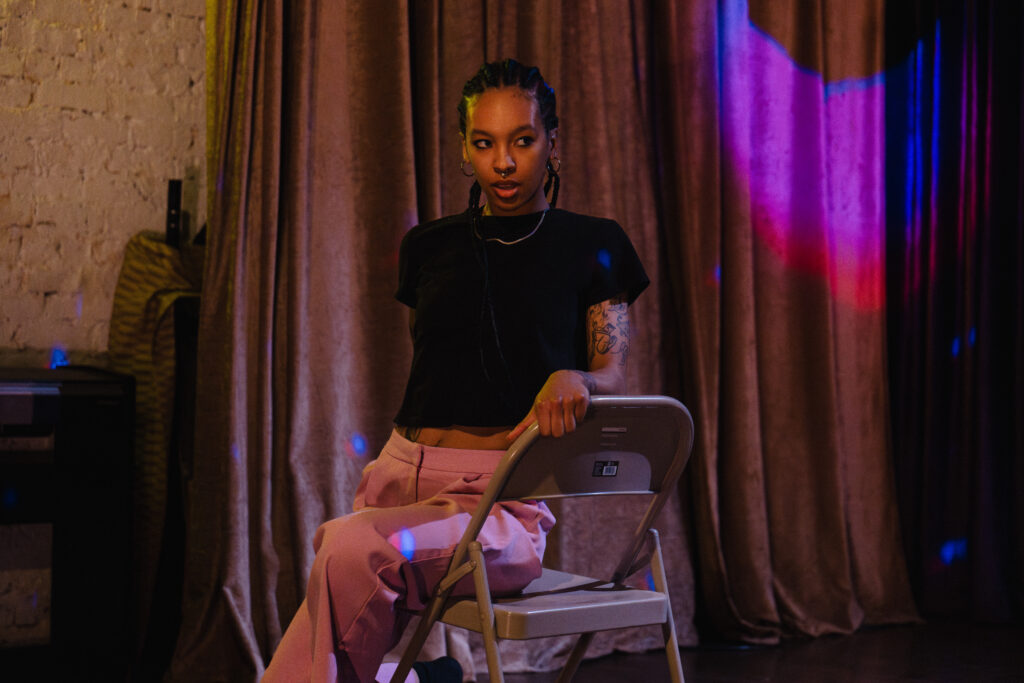
Also on Friday, choreographer Maddy McCarthy and dancers abscond from reality and into absurdity in “Shame and the Shamettes 2: Return of the Hatman,” a spoof on horror movies from the 1980s-90s. Picture an uneasy protagonist standing in their pajamas and bunny slippers. At their sides are beautifully dressed showgirls. To their left, an MC in a tuxedo T-shirt and black skirt addresses the audience through a rhinestone microphone. Everyone knows why they are there…except the protagonist! Meanwhile, an eerie masked ghoul called “Shame” stalks the protagonist. “It’s supposed to be confusing,” says McCarthy, “because that’s what shame feels like. Shame shows up, then what? Fear defiance, anger, love… you watch the protagonist go through these different versions of responding to shame.” In the end, the protagonist gets their power back but does not eradicate or kill Shame but figures out how not to let it rule their life and how to integrate it into their person holistically, an absurd journey that results in a salient life lesson.
Thursday’s “Education Day” offers a wide arrangement of classes focused on making individuals into “outlaws” by learning to focus their methods of practical activism through artistic and revolutionary practices. “All revolution is started by outlaws of their times,” says Graves about the importance of education through the arts. “We wanted to touch on different ways that people in our community are already enacting revolution and give them tools … to make their body physically more ready, to make the information that they are putting out more accessible… and learn how to do it well and explore the places that will be beneficial to their way of revolution.”
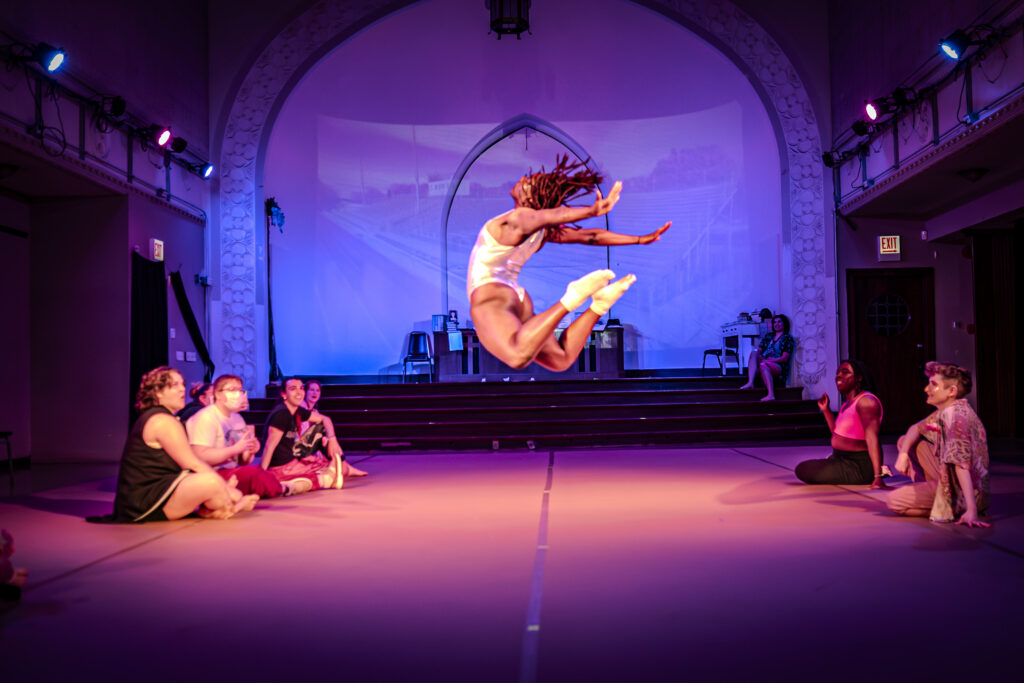
McCarthy will teach a workshop, “Heels Technique and Western Play Pretend,” that uses dancing in heels to break down mental barriers that hinder some from living a fulfilled life. “Often times, we are only able to engage with our sensuality and sexuality when we are with a partner or a hook up,” says McCarthy, “and it feels very dependent on having another person there to validate our sexuality and beauty.” Dancing in heels is a great way to engage with our own human sexuality without a partner, to see how it feels in the body and deepen that connection without needing another person to validate those feelings. McCarthy, who lives with chronic pain, offers stabilization techniques and exercises to make dancing in heels even more accessible to dancers of all abilities.
Dancer and activist L’Raven mixes performance art with protest and research in a workshop titled “(Art) It’s ALWAYS Political.” Attendees will use transcripts from interviews and an artistic medium of their choosing to bring these stories to life through realistic and abstract works of art while gaining a better understanding of what life is like under incarceration. “The jail is hard to visualize because we get so much propaganda,” says L’Raven, “so I think it makes sense to put it into a new form to make it more relatable to people.” L’Raven stresses that to engage in political art is a choice, and but also that “in this time where art and marginalized people are under attack, we don’t have the privilege of leaning into escapism in our art.” Through practicing art responsibly, we not only save others but save ourselves, too.
Besides workshops and performances, there will be a Queer Art Market, where attendees can purchase arts and crafts to support local artists (including some of the performers), and community groups will be on site to offer information, resources and ways to engage with their organizations.
The mission of “Outlaws of the Arts” is to get back to the radical roots of revolutionary community building. “In a capitalistic, individualistic world, building community can be radical,” says Reign Drop. “When existence is resistance, using art as a form of expression is how we find connection with each other.” “Outlaw of the Arts” invites you to claim space where none was given, rewrite rules that fail to serve the citizenry and build beauty out of defiance—to be an “outlaw”!
“Outlaw of the Arts Festival” is presented by We Are Collective, Aug. 28-30, at Chicago Danztheatre Ensemble, 1650 W Foster Ave. Workshops run Thur. from 4-9pm, $8-$20. Performance showtimes are Sat. and Sun. at 7:30pm, $15-$44. For tickets and more information, visit the website by clicking HERE.
Copyright 2026, See Chicago Dance, All Rights Reserved