

Visceral Dance Chicago presented “SPRINGTHIRTEEN” at the Museum of Contemporary Art this past weekend. Marking the company’s 13th year, the spring program celebrates a wide emotional range through a mix of old and new works. Featuring choreography by guest artists Gustavo Ramírez Sansano and Micaela Taylor alongside Founder/Artistic Director, Nick Pupillo, the program moves between theatrical humor, intimate partnering, experimental design, and celebratory individualism to highlight the company’s pursuit to explore and challenge the contemporary genre.
Gustavo Ramírez Sansano’s “18+1” (2020) opens the program with a burst of personality, embracing dance as a site of joy, humor, and theatrical flair. Set to mambo music by Pérez Prado, the work thrives on contrast, blending strict, militaristic precision with unabashed silliness. Dancers in sleek black trench coats snap into sharp formations, before dissolving into exaggerated, clownish gestures. Faces stretch into cartoonish kisses, hands press dramatically to cheeks, and bodies shuffle with crab-like cuts.
These shifts are often, but never jarring, keeping the choreography snappy, unpredictable, and fun. Even in its silliest moments, the piece stays grounded in technical rigor. Fast, Latin-inspired footwork and sharp, militaristic arm lines cut through the chaos, keeping everything disciplined. Combined with a toss of confetti and the occasional theatrical wink, the work becomes both a celebration of Sansano’s career and the blending of genres.
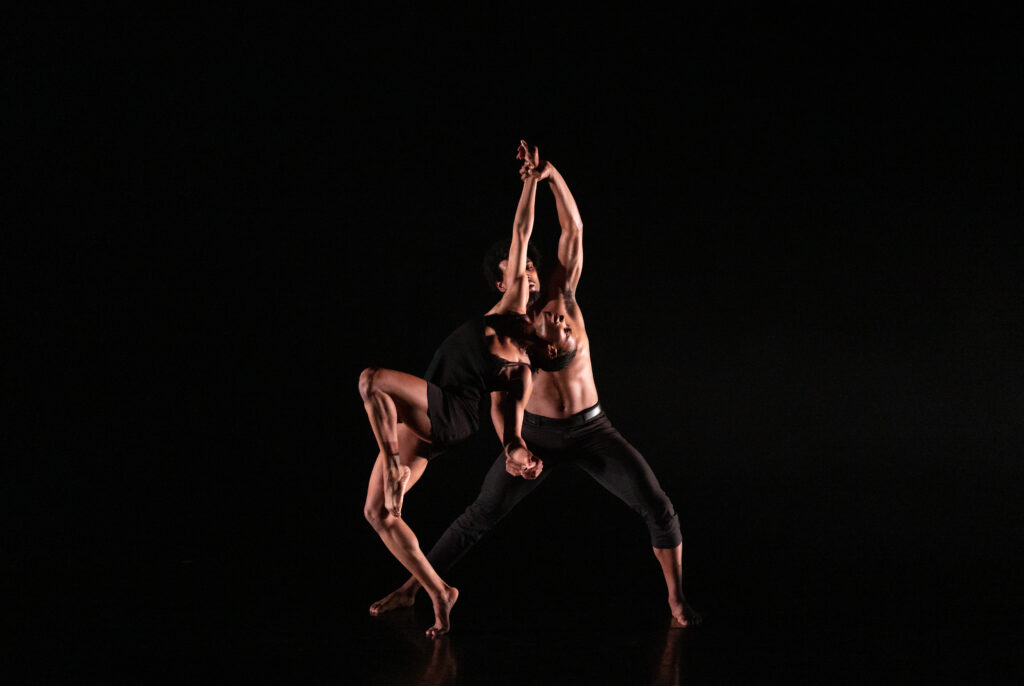
Nick Pupillo’s lover’s duet, “Mad Skin” (2019), performed by Nia Davis and Diego Gonzales, shifts the tone entirely. The relationship at its center feels as inescapable as it is tender. With both dancers caught in a tense cycle of longing and restraint, the choreography embodies the idea that love can be as deep as the pain it carries.
The partnering is the emotional core of the work, demanding extraordinary trust and control. Gonzales repeatedly supports Davis’s weight, throwing, lifting, catching, and supporting her through precarious balances; she stretches away from him, her body taut like a rubber band. The push and pull never resolves—even as they attempt to separate, they remain tethered. It is a haunting study in connection, where leaving feels impossible.
The world premiere of “Revel,” choreographed by Pupillo, is the evening’s centerpiece, a vibrant exploration of presence, joy, and unapologetic self-expression. It begins before the stage is even shown, with dancers mingling among the audience, taking selfies and chatting as if at a glamorous event. When they move to the front, a literal red carpet awaits, and they strut, pose, and preen with infectious confidence.
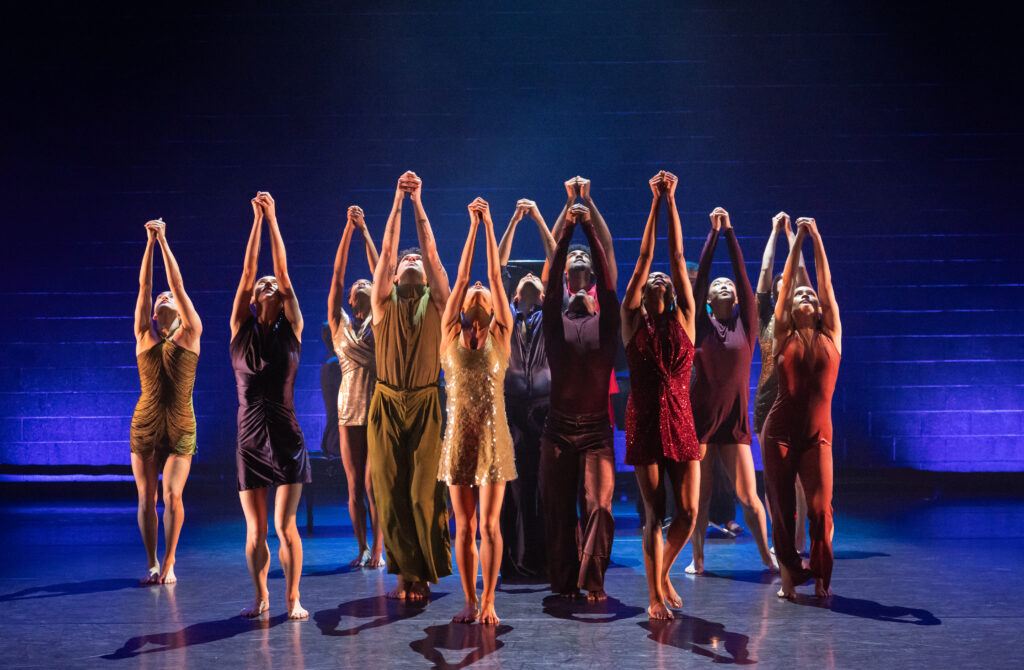
After basking in the spotlight, the curtain rises and focus shifts from the dancers to the musicians positioned center stage, pianist Shi-An Costello and drummer Peter Ferry. Given their own time to shine, the dancers orbit them, responding in sharp style to the live piano and percussion as the music swells and softens. The energy builds steadily, with dancers stepping forward for their moment—turns quadruple, switch leaps soar, and extensions expand as dancers showcase their unique styles and strengths.
Every performer is given space to shine, to claim their moment without hesitation, and the technical prowess being displayed onstage makes it impossible for the audience to look away. As intensity peaks, the work circles back to its opening motif, the red carpet, for one final posing flourish before the ensemble gathers around the musicians, reveling together one last time before dropping exhausted to the floor.
Micaela Taylor’s “If You” (2025) introduces a more subdued, introspective tone. The movement is sharp, stilted, and at times robotic, interrupted only by brief moments of fluidity. The aesthetic is minimal, and the dancers wear vacant expressions. The piece builds an oppressive atmosphere that contrasts sharply with its moments of rolling release. This tension carries throughout the work, defiance in the face of conformity.
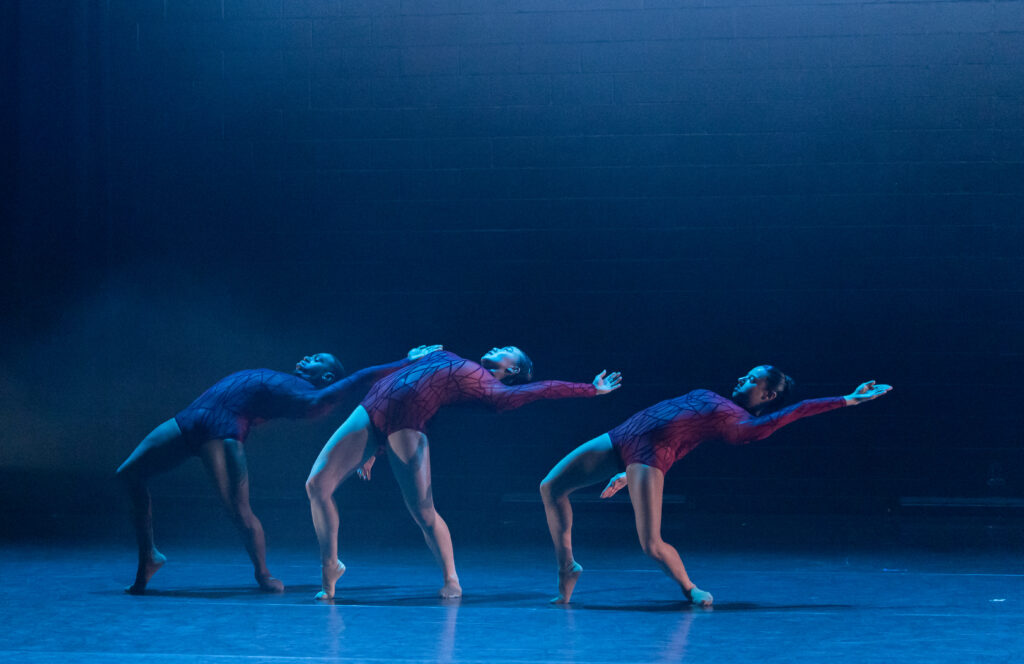
Closing the program, “Synapse” (2017) by Pupillo returns intensity with an experimental edge. The piece explores the interplay between movement and light, using electric blue light bars to cover, shift, and respond to the dancers. At times, the lighting appears to chase the performers across the stage; at others, it confines them, forcing a negotiation between body and environment.
As the electric beats grow louder, the lighting transforms, bleeding red across the stage. It then alternates between blue and red, creating a pulsing effect that evokes the urgency of emergency lights. The dancers respond in kind with sharp isolations, explosive jumps, and grounded lunges that demand control. The piece ultimately succeeds as a multidisciplinary experiment, showing how light can actively shape the way movement is experienced.
Across the program, Visceral Dance Chicago demonstrates remarkable range. The dancers move with emotional intensity, technical clarity, and an ease that defies the difficulty of the choreography. The program’s diversity is its strength, offering a vibrant entry into the spring season. With the world premiere of “Revel,” the company reaffirms its ability to not only honor its past, but to step boldly into what comes next.
Visceral Dance Chicago presented “SPRINGTHIRTEEN” April 17-19 at Museum of Contemporary Arts Chicago, 220 E Chicago. For more information, visit the event page by clicking HERE.

Copyright 2026, See Chicago Dance, All Rights Reserved