
The Philosophy of Dance: What Isn’t Dance?
A previous investigation (click HERE) revealed one possible definition for what is dance presented by Monroe C. Beardsley, reprinted here for convenience: Dance must contain “a motion, or sequence of motions, [that do] not generate practical actions, and [are] intended to give pleasure through perception of rhythmic order,” and also an “overflow or superfluity of expressiveness to mark it as belonging to its own domain of dance.” If one accepts this definition, then one must exclude certain types long thought to be dance from the category. Naturally, informing self-supposed serious dance artists that they are not actually dancers did rub some people the wrong way.
One counter response to Beardsley was presented by Noël Carroll and Sally Banes in an article published in Dance Research Journal, titled “Working and Dancing: A Response to Monroe Beardsley’s ‘What Is Going on in a Dance?'” Carroll and Banes defend the existence of post-1960s postmodern dance, a genre excluded by Beardsley, because “we fear that his definition is unwittingly conservative, operating to exclude prescriptively some of the most exciting work of contemporary choreographers” (38).
The first argument presented by Carroll and Banes rejects the notion of rhythm and superfluity of movement as necessary characteristics of dance. “In general,” they say, “whether one is speaking about art dance or social dance, the context of the event in which the movement is situated is more salient than the nature of the movement itself in determining whether the action is dance” (37). For example, imagine a truckload of patriotic cane cutters in 1980’s communist Cuba. Such workers may “raise their machetes much higher than necessary, use more force than is required by their task, and perhaps their swinging becomes rhythmic,” but the context in which they perform such acts is in itself not a performance, and “their activity is expressive of patriotic zest and revolutionary zeal, but it is not dance” (37). Perhaps the fact of location and intention are what matters, that an action to organize and present a dance event is sufficient reason to call such an event a work of dance.
Next, Carroll and Banes argue that that proof of dance is found exclusively in (but not limited to) two criteria, that it evolves out of a trend in art, and that “[i]t is enough that the theories [of an evolving artistic tradition] have currency in their appropriate communities of discourse” (39). As an example, they focus on “Room Service” (1962), a “task dance” choreographed by experimental dancer, choreographer, and filmmaker, Yvonne Rainer, composed of practical actions such as two dancers carrying a mattress up an aisle, out one exit, and back in through another. Carrol and Banes argue that because “Room Service” comes out of the “anti-illusionist” trend in modern art—that “attempts to close the conceptual gap between artworks and real things” (38)—and because a sufficient quantity and/or quality of people over time have considered it to be dance, therefore, it is dance.
Though Carroll and Banes present a more detailed argument than summarized here, one need not be a logician to spot the fallacies in these major premises. As noted in a response to Carroll and Banes by Gregory Scott (fifteen years after the former was published) the idea that one can rent a theater, move a chair stage right to left, and call it dance is at best quixotic, and it is the exact thing that Beardsley’s theory protects against—yes, anyone can “dance,” but the superfluity of movement produced by trained dancers is of a kind unachievable to even the most zealous cane cutter without guidance and practice. As Scott also points out, “appealing to an ‘evolving dance theory’ when trying to establish a definition of “dance” is circular, as the word to be defined is included in the definitional phrase itself” (Scott 12), like saying that something is dance because people say it is dance, or saying that because dance has historically followed trends in art, that anything that follows trends in art is dance. Carrol and Banes have perhaps proven that “Room Service” and similar works are indeed art or minimalist drama, but their argument is not logically rigorous enough to disprove Beardsley’s theory.
The topic is too broad to be covered and decided by only a few paragraphs, or a few philosophers, and what is presented here is one of many trains of thought on the matter, but the contention between Beardsley, Carrol and Banes, and Scott serves as a good example of the kind of discourse present in the philosophy of dance. How dance works is observable, for one can see it in others; why people dance is observable, too, for one can observe it within one’s self; what makes something a dance is not observable but resides in the abstract realm of subjectivity, a limitless and fertile realm full of surprises, where even the most open-minded dancer/spectator might discover a conservative basis at the root of their opinions, or vice versa.
What do you think? Can carrying a mattress through a room be considered dance? If enough people agree on what is dance, does that make it true? Should one forgo generic labels entirely and simply appreciate a work of dance though the intentions of the choreographer and performers? Send a response to editor@seechicagodance.com and possibly see your opinion printed in a future column.
-Managing Editor, Tristan Bruns
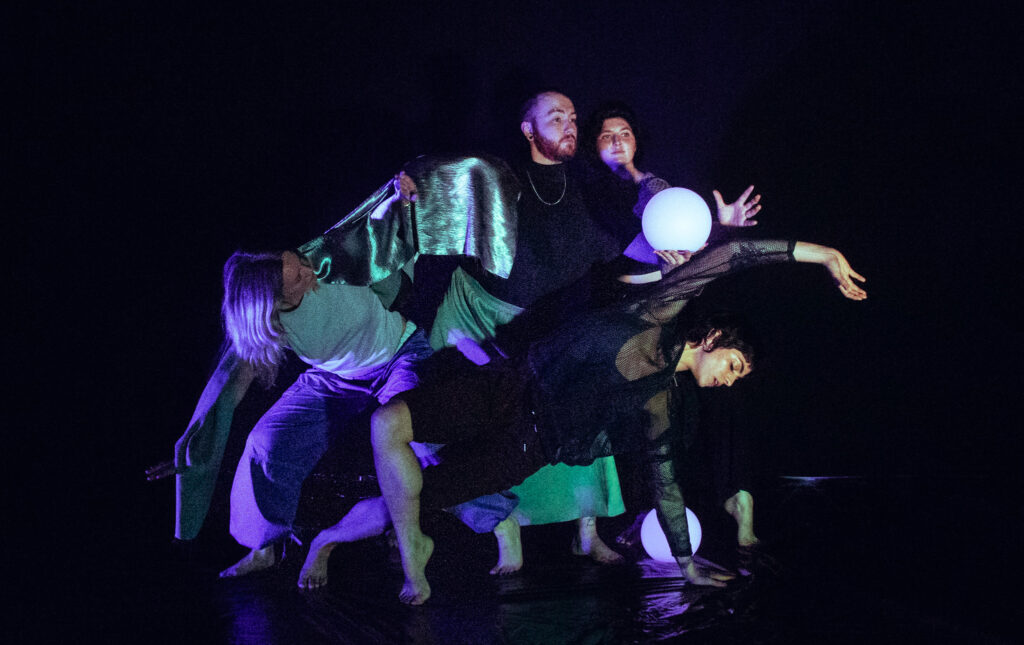
We Are Collective presents “Arts of Lore Festival,” Sept. 4-5, Chicago Danztheatre Ensemble
“Arts of Lore is a community arts festival that will be celebrating the lore of 8 individual artists. These artists are presenting works that relate to their personal lore, their community stories, and ancestral histories. Arts of Lore is meant to uplift queer folks & those around them by showcasing, tending to, and celebrating our varied experiences. Become part of our lore by attending Arts of Lore!”
“In addition to the performance, we transform spaces to make an immersive experience as well as host the Queer Art Market which platforms queer artists from within We Are Collective & our community to promote the other art forms that they produce. We also offer community resource tabling at our events as well to provide a net of queer-safe spaces or organizations for the Chicago community with organizations like Brave Space Alliance, Center on Halsted, and Chicago Books to Women in Prison.”
Read a review of We Are Collective’s “A Flower in the Tumbleweeds” (2026) by staff writer, Isabel Campisteguy, by clicking HERE.
For tickets and more information about “Arts of Lore Festival,” check out the event page by clicking HERE.
Joffrey Ballet presents “Liliom,” Sept. 17-27, Lyric Opera of Chicago
“One of the most influential artists of our time, Neumeier brings his landmark narrative ballet, ‘Liliom,’ to the Joffrey for its Chicago premiere. Inspired by Ferenc Molnár’s 1909 play and later the basis for the musical adaptation ‘Carousel,’ Neumeier’s adaptation follows Liliom, the charismatic but self-destructive carnival barker whose fierce love for Julie is unraveled by pride, poverty, and rage. Set amid the dreamlike, faded glamour of an American amusement park during the Great Depression, passion turns toward crime–and ultimately, tragedy.”
“Granted a chance to return to Earth after death, Liliom confronts the consequences of his choices and attempts one final act of grace. What remains is a stark reckoning with guilt and the fragile possibility of redemption. Rarely presented in the United States, ‘Liliom’ is among Neumeier’s most profound artistic endeavors. Distinguished by his signature emotional depth and theatrical nuance, ‘Liliom’ takes shape through multi-Academy Award-winning composer Michel Legrand’s evocative score, blending classical and jazz influences that echo a restless America.”
Read a review of Joffrey Ballet’s “Eugene Onegin” (2026) by Managing Editor, Tristan Bruns, by clicking HERE.
For tickets and more information about “Liliom,” check out the event page by clicking HERE.
“Nile Noir: A Curated Cultural Experience and Belly Dance Cabaret,” Sept. 19, Connect Gallery
“‘Nile Noir’ — A captivating evening celebrating the beauty, power, artistry, and cultural expression of Black women through belly dance, music, movement, and storytelling, featuring an incredible lineup of Black women performers bringing their unique energy, artistry, and traditions to the stage and a vendors market featuring work goods from local artisans.”
Connect to the artists through their Instagram by clicking HERE.
For more information and tickets about “Nile Noir,”, check out the event page by clicking HERE.
INSÉKTA presents “MATADORA,” Sept. 24-26, The Dance Center of Columbia College Chicago
“‘MATADORA’ is a new work of Latine Futurism about an untamable creature and the blistering rage that can smother or unchain her: beast, or una diosa? ‘MATADORA’ confronts Latin American mythologies that make monsters of women’s suffering, and uses dance, physical theater, and visual culture to construct a new Latine archetype that refuses domestication. Gratuitous, grotesque, and laughing through the underworlds of her odyssey, ‘MATADORA’s’ starring beast is reborn: mutated and made whole in the dignity of her rage. Violence, misogyny (its own kind of myth) cannot discipline what is meant to be free.”
Read a sneak-preview review of “MATADORA” by contributing writer, Gery Moore, by clicking HERE.
For tickets and more information about “MATADORA,” check out the event page by clicking HERE.
Reign Drop presents “I AM: A Movement Story,” Sept. 25-26, Chicago Danztheatre Ensemble
“A trans punk dance-play showcasing the power of building community, I AM brings people together. I AM explores how transgender people see the world and how the world sees us, starring friendly characters and honoring the lives of our trans elders. This narrative-driven experimental movement production follows Billy, a trans lawyer aiding his clients and friends as their guiding light in this dark world. I AM demonstrates that hardships are easier when faced together, and we recognize that anyone can have the light within. Life doesn’t always have to be serious, but we have to be serious about loving each other.”
Meet Reign Drop in an interview with Canvas Rebel by clicking HERE.
For tickets and more information about “I AM: A Movement Story,” check out the event page by clicking HERE.
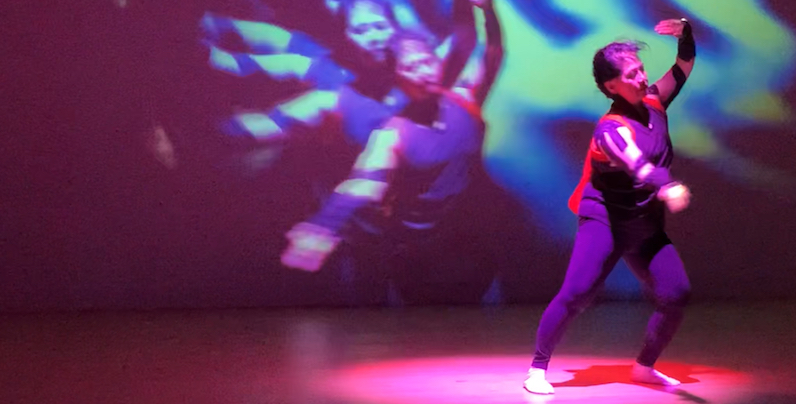
Chicago Dance Company presents “Presence,” Sept. 11-12, Dovetail Studios, FREE*
“Join Chicago Dance Company for an evening of contemporary dance by Chicago area choreographers. ‘Presence’ is a new production created by Chicago Dance Company, a 501(c)(3) nonprofit organization dedicated to cultivating meaningful artistry and connection through dance. This evening will feature 10 world premieres of contemporary choreography, showcasing a diverse range of works by emerging and established choreographers from the Rockford–Chicago area. Together, these pieces weave unique voices, perspectives, and movement styles into one powerful evening of performance.”
*”There is no admission charge to watch the performance, [but] we kindly ask for a donation of $20-$40 per person to support rental and insurance expenses.”
For more information and to RSVP, check out the event page by clicking HERE.
Ginger Krebs & Artists present “Protected by Invisible Fence, Sept. 18-20, MCA, FREE
“‘Protected by Invisible Fence’ is a choreographic work that examines the often-unseen technological forces shaping contemporary life—from the pressure to optimize health and productivity to the performance of identity on social media. A responsive network is created onstage by eight human performers and eight technologically enhanced crowd-control stanchions that detect when performers pass by or touch them and share quantifications of these activities through sound and light. Vernacular movement patterns, adapted from sources such as TSA screenings, warehouse workflows, screen savers, and reflex tests, invite audiences to reflect on how surveillance technologies influence our relationships with one another.”
For more information, check out the event page by clicking HERE.
Asian Improv aRts Midwest presents “Shubukai 50th Anniversary Celebratory Performance,” Sept. 19, The Edge Theater, FREE
“Asian Improv aRts Midwest (AIRMW) presents the ‘Shubukai 50th Anniversary celebratory performance […] Joining Shubukai Artistic Director Yoshinojo Fujima (aka Rika Lin) and the dancers of Shubukai will be special guests Koryu Nishikawa V, director of the Japanese puppet theater company Hachioji Kuruma Ningyo and Japanese classical dancer Kanshichinao Fujima and with support from Tsukasa Taiko & Toyoakimoto Shamisen.”
For more information and to RSVP, check out the event page by clicking HERE.
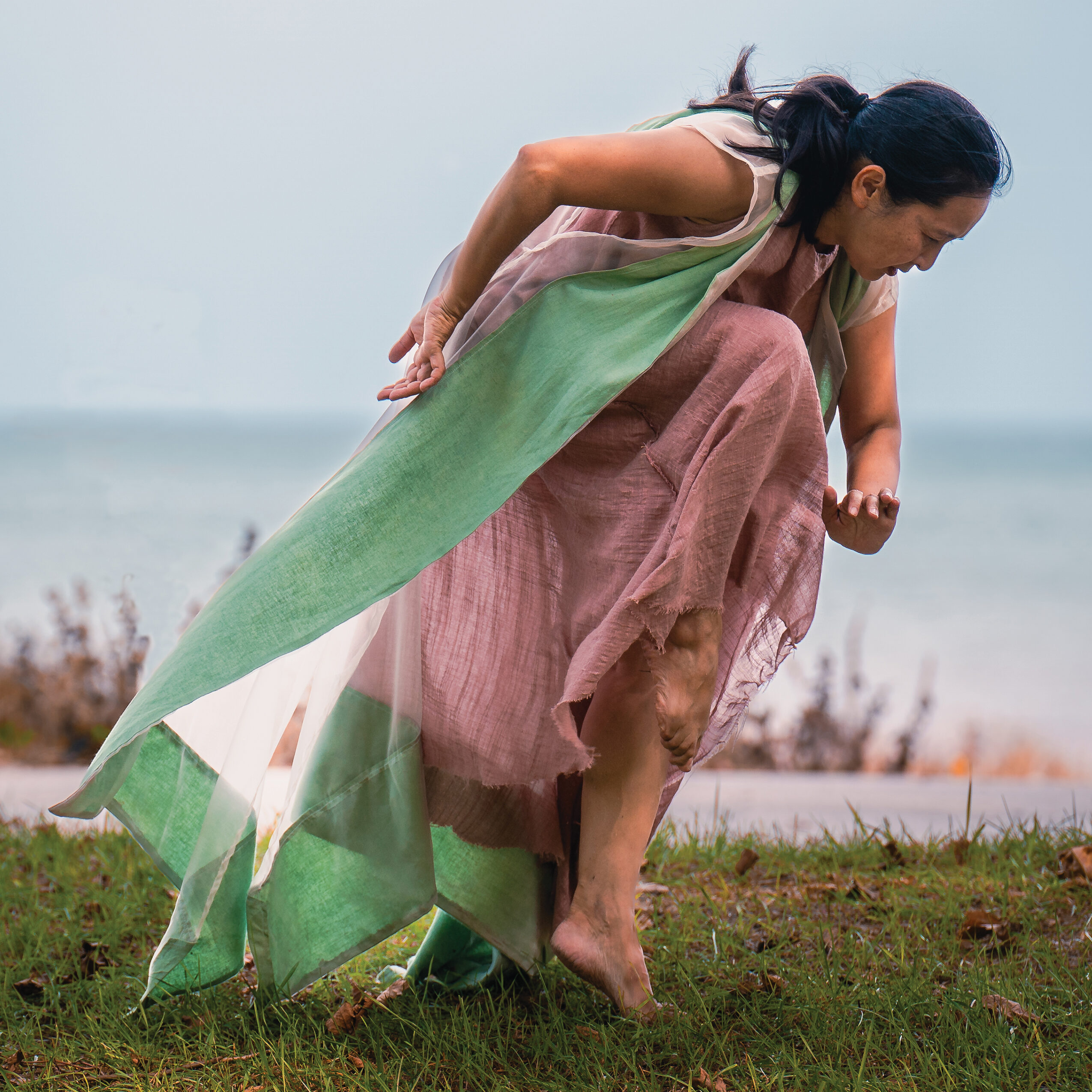
Ayako Kato, “Art of Being: Relating as a Wave-Particle,” Sept. 7 – 28, Chicago Danztheatre Ensemble
(Dance/Movement Workshop)
“How are we and our bodies relating to earth, one another, community, environment, politics, and beyond through micro and macro levels? How can we shift the relationships we have positively with our ever changing surroundings through our ways of being? Ayako, who experienced Noguchi Taisō/Exercises in Japan this summer and found resonance due to having similar concepts and perspectives such as “connecting with the core of the earth,” will guide participants to relate our own bodies and minds further deeply and extensively through movement, dance, and expression along with somatic and improvisational exercises. Ayako will be also touching on Superstring Theory. This is an open-level class. Practitioners of all forms of dance and movement lovers are welcome. Dress comfortably so you can move with ease.”
For tickets and more information, check out the event page by clicking HERE.
Copyright 2026, See Chicago Dance, All Rights Reserved